What Is PayPal? How It Works, Fees and Benefits
By Markets & Investing DeskUpdated Nov 10, 2026
Definition
PayPal is an online payment platform that lets people and businesses send, receive and spend money using linked bank accounts or cards without sharing those details with the other party.
Key takeaways
- PayPal funds online and in-store payments from a linked checking account, debit card or credit card.
- Basic payments in your home currency are free for consumers. Sellers pay a percentage of each sale plus a fixed fee, and the rate depends on how the buyer pays.
- PayPal is not a bank, but in the U.S. it is subject to many of the same consumer protection rules that banks follow.
PayPal is an online payment platform that lets individuals and businesses send, receive and spend money electronically without handing their card or bank details to the other party. You link a bank account, debit card or credit card to a PayPal account. PayPal then sits between you and the merchant or person you are paying, so the seller sees that a payment arrived, not your account numbers. Consumers can use it for most basic payments without a fee. Merchants pay fees on the payments they receive, and those fees are how PayPal earns most of its revenue.
What Is PayPal?
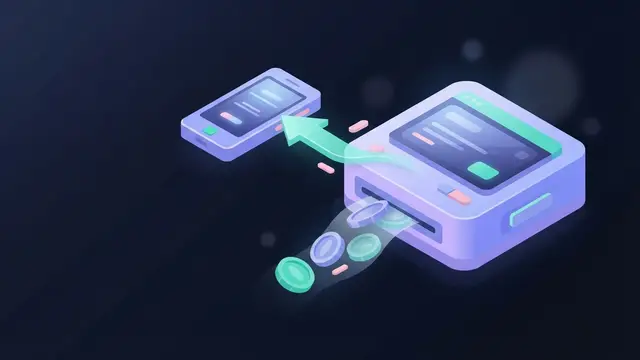
PayPal is a payment intermediary and a type of digital wallet. It stores your funding sources and lets you pay with them through one login, either at an online checkout that offers PayPal or through a PayPal card reader at a physical store. It also works as a person-to-person transfer service: you can send money to an email address or phone number.
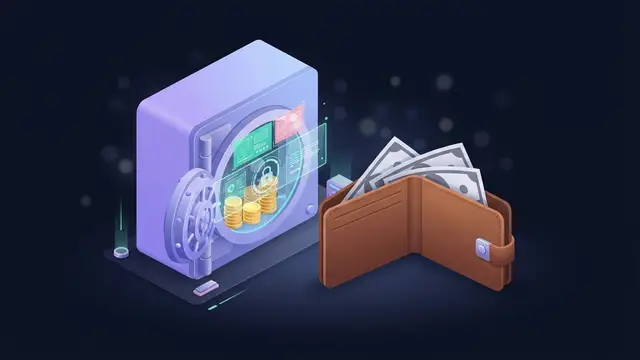
PayPal does not replace your bank or card. It routes payments drawn from them. If you pay with a linked credit card, the purchase still lands on that card’s statement and is subject to the card’s terms. If you pay from a linked bank account, the money leaves that account. A PayPal balance is money PayPal holds for you, usually from payments you received, and it can be spent or moved to your bank.
How PayPal Works
Opening an account
You need an email address to sign up. To finish setup you add at least one credit card, debit card or bank account, and PayPal verifies your mobile number. PayPal checks that the person opening the account is the rightful owner of the linked payment methods before the account can be used. Business accounts also start with an email address and then add business details.
Paying and sending money
At an online checkout that lists PayPal, you choose the PayPal option, log in and confirm the payment. Because your payment details are already saved, you skip re-entering a card number on the retailer’s site. Purchases are completed within minutes.
To send money, you enter the recipient’s email address or phone number. The recipient does not need an existing PayPal account. If they don’t have one, they are asked to create one to collect the funds. This makes PayPal usable for splitting costs, paying a freelancer or sending money to relatives.
Consumers can also pay invoices through PayPal, which is common for small service businesses that bill customers by email.
Receiving money as a seller
When a business makes a sale, the funds may be available right away. In some cases PayPal holds some or all of the money for up to 21 days. Holds are most common for newer sellers who have no sales history on the platform. A seller who depends on fast cash flow should plan for this: an order paid today might not be spendable for three weeks.
Money in a PayPal balance can be transferred to a linked bank account. A standard transfer is free. An instant transfer, which moves the money faster, carries a fee.
PayPal Fees
In PayPal’s fee model, the person paying usually pays nothing and the business being paid covers the cost. Terms have included the following. Fees change, so confirm the current schedule on PayPal’s site before relying on a specific rate.
Free for consumers:
- Paying for a purchase in your home currency
- Sending money to friends or family, rather than a business, in your home currency
- Standard transfers between PayPal and your bank
Charged to consumers:
- Instant transfers to your bank
- Currency conversion, listed at 4% and charged to the buyer or sender when a purchase or transfer involves converting currency
Charged to sellers:
- A percentage of each payment plus a fixed fee per transaction. The percentage has ranged from 2.29% to 3.49% depending on the payment method, with credit and debit card transactions listed at 2.99% plus a fixed fee.
Other fees apply to less routine activity, such as buying and selling cryptocurrency and receiving charitable donations. PayPal-branded credit and debit cards have no cost to use for ordinary purchases, but like any card they can carry fees for certain actions, and the credit card charges interest (APR) on carried balances.
Worked example (hypothetical)
These numbers illustrate the mechanics. The fixed fee and exchange rate are assumptions, not PayPal’s terms.
Seller side. A small online shop sells a $100 item, and the buyer pays by card. Assume a rate of 2.99% plus a fixed fee of $0.49.
- Percentage fee: $100 × 2.99% = $2.99
- Fixed fee: $0.49
- Total fee: $3.48
- Seller receives: $100 − $3.48 = $96.52
The fixed portion matters more on small sales. On a $10 sale under the same assumptions, the fee is $0.30 plus $0.49, or $0.79, which is 7.9% of the sale instead of 3.48%.
Buyer side. A U.S. buyer purchases an item priced at €100 and lets PayPal convert the currency. Assume the exchange rate PayPal uses is $1.10 per euro, and apply the 4% conversion fee to the converted amount.
- Converted price: €100 × 1.10 = $110.00
- Conversion fee: $110 × 4% = $4.40
- Total cost to the buyer: $114.40
With a card that has no foreign transaction fee, the buyer could instead choose to be charged in euros and let the card issuer convert. Which costs less depends on the card’s terms and the exchange rates applied, so compare on large foreign purchases.
PayPal for Businesses
For merchants, PayPal is more than a checkout button. Its business tools cover:
- Online payments: PayPal as a checkout option on a website, plus invoicing
- In-person payments: card readers for physical stores and market stalls
- Business management services: tools for running day-to-day operations
- Credit and financing: borrowing products for business owners
The main appeal for a small business is easy setup and the fact that many shoppers already have accounts. The trade-off is that merchants carry the fees, which can be relatively high compared with some card payment processors.
PayPal vs. Similar Services
PayPal is easy to confuse with several other products. The differences affect cost, protection and who the service is built for.
PayPal vs. a bank. PayPal holds balances and moves money, but it is not a bank. It does not take deposits in the way a bank does. In the U.S., it is still subject to many of the consumer protection rules that apply to banks, including the rules on liability for unauthorized transactions.
PayPal vs. Venmo. Venmo is owned by PayPal. It came with PayPal’s 2013 purchase of Braintree, Venmo’s owner, and it focuses on social, app-based payments between friends. Venmo and PayPal share an owner but are separate apps with their own accounts.
PayPal vs. Stripe. Stripe is a payments platform built mainly for businesses that want to embed and customize payment processing in their own websites and apps. Comparisons have generally found the two comparable in services and fees, with PayPal easier for small merchants and Stripe more customizable. A 2024 estimate put each at about 38% of online payments. For consumers, the key difference is that Stripe usually runs invisibly behind a card form, while PayPal is a brand you log into.
PayPal vs. paying by card directly. At a U.S. online checkout, the main alternative to PayPal is typing in a card number. PayPal can be faster if your card is already saved, and the merchant never receives your card details. Paying directly by card relies on the card network’s and issuer’s protections instead.
Security and Consumer Protection
PayPal’s core security feature is that the payer does not share credit card or bank account numbers with the seller. A data breach at a retailer therefore does not expose details the retailer never had. PayPal uses end-to-end encryption, and users can turn on two-factor authentication, which requires a second step such as a code sent to your phone when you log in.
PayPal also offers buyer protection for purchases that never arrive. This adds a dispute route if you pay a seller who fails to deliver.
For unauthorized transactions, timing matters. Under U.S. consumer protection rules, how much of a loss you bear depends on how quickly you report the activity, so prompt reporting limits your liability.
History of PayPal
PayPal started as a product from Confinity, which launched a payment service for Palm Pilot users in the late 1990s. Confinity merged with X.com, an online banking company, and the business officially took the PayPal name in 2000.
PayPal became a mainstream service through eBay, where it was the preferred way for buyers and sellers to settle auctions. eBay acquired PayPal in 2002, made it the site’s official payment service and worked to expand its reach. In 2015, PayPal was spun off as an independent public company. Its shares trade on the Nasdaq under the ticker PYPL.
The company has grown partly through acquisitions. Beyond Braintree and Venmo, its brands include Xoom (international money transfers), Zettle (in-person payments), Hyperwallet and Honey.
Limitations of PayPal
- Merchant costs. Fees can exceed what some card processors charge, and the fixed fee weighs heavily on small sales. A business that needs deep customization, or that processes high volumes where fractions of a percent matter, should compare PayPal with Stripe and other processors.
- Fund holds. New sellers may have payments held for up to 21 days, which can strain cash flow.
- Extra charges for speed and currency. The 4% conversion fee can add up on international purchases, and instant transfers carry a fee.
- Not a bank. PayPal is a payment service, not a substitute for a bank account.
- Limited role in stores. In physical stores, PayPal is one payment option among several.
The Bottom Line
PayPal suits shoppers who want to pay online without giving card numbers to retailers, and most basic consumer payments cost nothing. Sellers carry the fees, and the fixed charge weighs heavily on small sales, while new sellers may face fund holds of up to 21 days. Businesses with high volume or customization needs should compare PayPal with Stripe and other processors before committing.