What Is a Digital Wallet? How Cashless Payments Work
By Markets & Investing DeskUpdated Nov 10, 2026
Definition
A digital wallet is a software app that stores card or bank account details and uses them to pay or send money from a phone, watch, computer or other connected device.
Key takeaways
- Device wallets replace your card number with a token, so merchants never receive the real number.
- In stores, wallets pay by NFC tap or QR code, and online they confirm with a fingerprint, face scan, PIN or password.
- Pass-through wallets like Apple Pay hold no money, while PayPal, Cash App and Venmo let users keep a balance.
- Money held in a stored-balance wallet may lack the protections of an insured bank account.
A digital wallet (also called an electronic wallet or e-wallet) is a software application that stores payment credentials, such as credit card, debit card or bank account details, and uses them to make purchases and transfers from a phone, smartwatch, computer or other connected device. Instead of handing over a plastic card, you authorize the payment on your device, and the wallet sends the payment data to the merchant or the recipient.
Many digital wallets also hold things that never involved money: boarding passes, loyalty cards and, in some places, identification.
What a Digital Wallet Can Store
The core function is payment: you load one or more cards or a bank account, choose a default and pay with the device. Depending on the provider and your location, a wallet may also store:
- Gift cards, membership cards and loyalty cards
- Coupons and event tickets
- Plane, train and transit tickets
- Hotel reservations and room keys
- Driver’s licenses and state ID cards (accepted in some U.S. states, not all)
- Car keys for supported vehicles
- Cryptocurrency or a crypto-linked debit card
How a Digital Wallet Works
Setup
You add a payment method by entering card details or scanning the card with the device camera. The wallet provider checks the card with the issuing bank, which may ask you to confirm through a text code or its own app. Wallets built into phone operating systems typically replace the real card number with a token, a substitute account number tied to that specific device. The merchant receives the token, not your actual card number, so a breach at the merchant does not expose the number printed on your card.
Transmitting the payment
At a physical point of sale, the wallet uses the device’s wireless hardware to send payment data to a terminal built to read it:
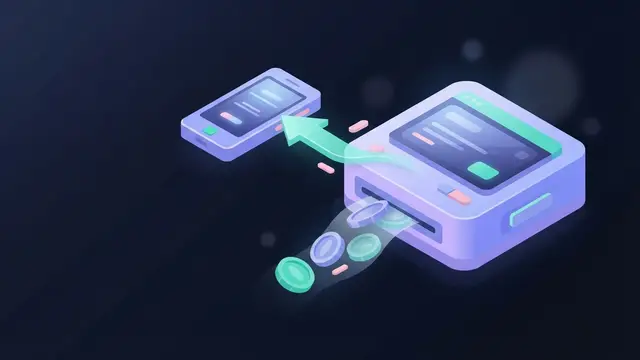
- Near field communication (NFC): Two devices exchange data through electromagnetic signals when held a few centimeters apart. This is the “tap to pay” method used by phone and watch wallets at contactless terminals.
- QR codes: Quick response codes are matrix barcodes that store information. Either you scan the merchant’s code with your camera inside the wallet app, or the merchant scans a code your wallet displays.
- Magnetic secure transmission (MST): Samsung phones once generated a magnetic field that mimicked a card swipe, so they worked with older magnetic-stripe readers. Samsung dropped MST beginning with 2021 models.
Online and in apps, there is no terminal. The wallet passes the payment credentials to the merchant’s checkout after you confirm with a fingerprint, face scan, PIN or password.
What happens after you tap
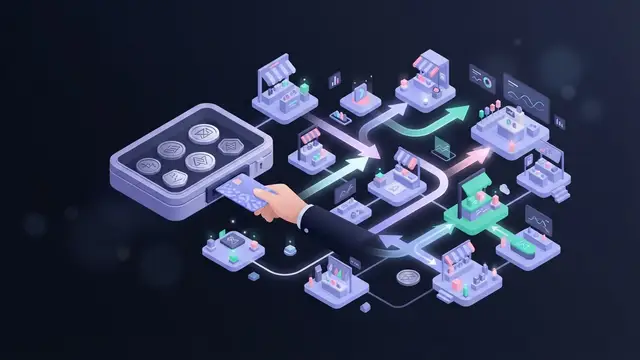
The terminal forwards the payment data to the merchant’s payment processor. From there the transaction travels through gateways, the merchant’s acquiring bank and the card network to the bank that issued your card, which approves or declines it. The approval comes back along the same chain, usually within seconds. The wallet sits at the front of an existing card transaction. It does not replace the card network or your bank.
Worked example (hypothetical)
Maria has added her debit card to her phone’s wallet. At a coffee shop she:
- Holds her phone near the contactless terminal.
- Confirms with a face scan, which unlocks the wallet’s stored token.
- The phone sends the token and a one-time cryptographic code over NFC.
- The coffee shop’s processor routes the transaction through the card network to Maria’s bank.
- Her bank recognizes the token, maps it to her real debit card, checks her balance and approves.
- The money comes out of her checking account exactly as it would with a card swipe.
The wallet held no money in this example. It only stored and transmitted the credential. If Maria had paid from a balance held inside a payment app, step 5 would draw on that app balance instead of going straight to her bank.
Types of Digital Wallets
Wallets differ less in the technology than in where the money sits and what you can do with it.
Pass-through (device) wallets store cards and pay with them but hold no money of their own. Apple Pay, Google Wallet and Samsung Wallet work this way for card payments. Providers add features on top: Apple partnered with Goldman Sachs to issue the Apple Card, and some device wallets let you load funds or add a stored-value card.
Stored-balance wallets let you keep money inside the account, received from other users or transferred from a bank, and spend it directly. PayPal, Cash App and Venmo let users hold a balance. Many people use them for peer-to-peer payments as much as for shopping.
Retailer and regional wallets serve a specific merchant or market. Walmart Pay works in Walmart’s ecosystem. Alipay is a large wallet in China. Vodafone’s M-PESA lets users store and send money by mobile phone, often where bank branches are scarce.
Crypto wallets store the keys that control cryptocurrency. Some card-linked products bridge crypto and ordinary payments: Coinbase offers a Visa-issued debit card that can be added to Apple Pay, and it converts cryptocurrency to dollars at the current rate when you spend.
Advantages of a Digital Wallet
- Less exposure of card data. With tokenization, merchants never receive the real card number, and you show no physical card that could be skimmed or copied.
- Less to carry and lose. Cards, tickets and sometimes ID live on one device. Losing the phone means locking or wiping it, not canceling every card one by one.
- Faster checkout. Tapping or confirming biometrically replaces typing card numbers online or inserting a chip in a store.
- Wider access to financial services. Stored-balance wallets and mobile money services do not always require an account at a traditional bank. Funds can sit with an online-only bank or the wallet provider, which gives unbanked and underbanked people a way to pay and get paid.
Limitations of a Digital Wallet
- Acceptance is not universal. Some small shops and less-developed areas don’t have contactless or QR-capable terminals, and some merchants accept one wallet but not another.
- It depends on the device and the network. A dead battery, a broken phone or a terminal that has lost its internet connection can block payment.
- A stolen or hacked device is a gateway. If a phone has no passcode or biometric lock, whoever holds it may reach your payment apps. Wallets from unvetted providers add another layer of risk.
- Balances are not always bank deposits. Money held in a stored-balance wallet may not carry the same protections as money in an insured bank account. That depends on how the provider holds customer funds and on its terms. A pass-through wallet avoids the question, because the money stays in your bank account until you spend it.
- Fees and limits vary. Instant transfers out of a wallet, cross-border payments and card-funded transfers can carry fees, and providers cap how much you can send or hold.
Digital Wallet vs. Related Terms
Mobile wallet. A mobile wallet is a digital wallet used on a phone or other mobile device. Every mobile wallet is a digital wallet, but a digital wallet can also run in a web browser on a desktop computer.
Payment app. A peer-to-peer app such as Venmo is mainly a tool for moving money between people. Many include a wallet function (a stored balance, saved cards), which is why the terms blur.
Crypto wallet. A crypto wallet stores private keys to blockchain assets rather than card credentials. It controls coins directly and usually needs an exchange or crypto card to turn them into dollars at a store.
E-purse or prepaid card. An e-purse is a stored-value product: money is loaded in advance and spent down, like a transit card or gift card. Its drawbacks are mostly those of stored value. The balance is limited to what was loaded, it may expire or carry fees, and if the card is lost without registration the money may be lost too. A stored-balance wallet works similarly but is usually tied to an identified account.
Bank account. A wallet is a way to access and move money. Unless the wallet itself holds a balance, your money stays at the bank, and the bank, not the wallet, is responsible for it.
FAQs
Is PayPal a digital wallet?
Yes. PayPal is mainly a payments and money-transfer platform, but its app includes a digital wallet where you can store cards and bank accounts, hold a balance and pay online or in stores.
The Bottom Line
Digital wallets suit anyone who wants faster checkout and less exposure of card data, since tokenization keeps the real card number away from merchants. A pass-through wallet leaves your money in your bank account until you spend, while a stored balance depends on how the provider holds funds and on its terms. Lock your device with a passcode or biometrics, and check fees and limits before moving money out.