What Is an ATM? How Automated Teller Machines Work
By Markets & Investing DeskUpdated Nov 10, 2026
Definition
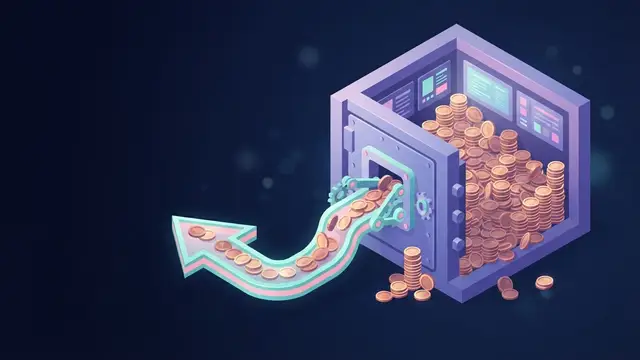
An ATM (automated teller machine) is a self-service banking terminal that lets cardholders withdraw cash, check balances and, on many machines, make deposits and transfers without a teller.
Key takeaways
- ATM stands for automated teller machine. Other names include automated bank machine (ABM), cashpoint and cash machine.
- An ATM does not hold your account. It is a terminal that asks your bank to approve each transaction.
- Basic machines dispense cash and show balances. Full-service machines also accept deposits and handle transfers and payments.
- Using a machine outside your bank's network can trigger two separate charges: one from the machine's owner and one from your own bank.
- Barclays installed the first ATM in London in 1967. There are now more than four million ATMs worldwide.
An ATM (automated teller machine) is a self-service banking terminal that lets a cardholder withdraw cash, check balances and, on many machines, make deposits, transfers and payments without a bank teller. The machine reads your card, verifies your personal identification number (PIN), sends the request over a payment network to the bank that issued the card, and completes the transaction only after that bank approves it. Because most machines run around the clock, an ATM gives access to an account 24 hours a day, seven days a week.
How an ATM Works
The hardware
Designs vary, but nearly every ATM is built from the same core parts:
- Card reader: reads the chip on the front of the card or the magnetic stripe on the back. The chip sends card data to the machine when the card is inserted or tapped.
- Keypad: used to enter the PIN, choose the transaction and type the amount.
- Screen: shows prompts that guide each step and displays account information such as balances.
- Cash dispenser: releases bills through a slot connected to a locked safe inside the machine.
- Receipt printer: prints a record of the transaction type, the amount and, usually, the remaining balance.
Full-service machines add slots that accept cash or paper checks.
The transaction process
A cash withdrawal follows a fixed sequence, even though it takes only seconds:
- You insert or tap your debit card (or a credit card, for a cash advance).
- You enter your PIN and choose a transaction, such as a withdrawal from checking.
- The ATM sends the card details, PIN data and requested amount to the machine operator’s processor.
- If another bank owns the machine, an interbank network routes the request to your card issuer.
- Your bank checks the PIN, the available balance and your daily limit, then approves or declines.
- On approval, the machine counts and dispenses the bills, and your bank debits the account.
- You take the cash, the card and, if requested, the receipt.
This sequence is why one bank’s card works at another bank’s machine. Shared networks, which developed in the 1970s, connect thousands of banks so that a machine can ask any participating issuer for approval.
Types of ATMs
Basic ATMs dispense cash and show account balances. Many off-site machines in stores, gas stations and airports are of this type.
Full-service ATMs accept cash and check deposits, move money between accounts, take loan and line of credit payments, and provide account details. Banks place them inside branches, in lobbies and outside on walls. Some features work only if you hold an account at the bank that operates the machine.
Independent ATMs are owned by businesses or ATM operators rather than banks. They are common in high-traffic places such as shopping centers, convenience stores, train and bus stations, casinos and restaurants, and they typically earn money from surcharges.
Bitcoin (crypto) ATMs are internet-connected kiosks that sell cryptocurrency for cash and, on some machines, buy it back for cash. Despite the name, they are not connected to your bank account the way a bank ATM is.
Using an ATM
How much you can withdraw
Your bank sets a daily withdrawal limit, and it varies by bank and account type. Some accounts cap cash withdrawals at a few hundred dollars a day, while premium accounts may allow much more. Separately, an individual machine may limit how much it dispenses in a single transaction and can only pay out in the bill denominations it holds. If you need more cash than your limit allows, your bank may raise it temporarily on request, or you can withdraw the rest from a teller at a branch.
How deposits work
At a full-service machine, you insert cash or checks directly, and the machine counts the bills or scans the checks and shows the total for you to confirm. Older machines may ask you to fill out a deposit slip and seal the items in an envelope. Endorse each check on the back, and writing “For Deposit Only” limits what can be done with it if it is lost. Deposited funds, particularly checks, may not be available right away; your bank’s funds availability policy determines when you can spend them.
ATM Fees
Account holders can usually use their own bank’s ATMs for free. An out-of-network withdrawal can involve two distinct charges:
- Surcharge: charged by the machine’s owner and disclosed on screen before you confirm.
- Out-of-network fee: charged by your own bank for using a machine it doesn’t own. This one does not always appear on the ATM screen.
Some banks and credit unions reimburse surcharges, and some belong to surcharge-free networks that let customers use partner machines at no cost.
Hypothetical example: Suppose an independent ATM charges a $3.00 surcharge and your bank adds a $2.50 out-of-network fee. Each withdrawal costs $5.50. At one withdrawal a week, that comes to $5.50 × 52 = $286 a year. On a $60 withdrawal, the fees equal about 9% of the cash received. Withdrawing larger amounts less often lowers the fee per dollar, and using in-network machines removes these charges altogether.
Using a credit card at an ATM is a cash advance, not a withdrawal of your own money. Card issuers commonly charge a cash advance fee, and interest usually starts accruing immediately at a rate that may be higher than the card’s purchase APR.
Using ATMs Abroad
ATMs are often the simplest way to get local currency while traveling, because the withdrawal is converted at a network exchange rate that is generally better than currency exchange counters offer. The costs come from fees rather than the rate:
- Your bank may charge a flat international ATM fee, a percentage foreign transaction fee, or both.
- The local machine owner may add its own surcharge.
- Some machines offer to charge you in your home currency instead of the local one. That conversion is set by the machine operator and is often less favorable than letting your bank convert.
Many foreign receipts don’t show the exchange rate applied, so the final dollar cost may only become clear on your statement. Telling your bank before you travel can prevent its fraud system from blocking withdrawals in an unfamiliar country.
Limitations and Risks
An ATM covers routine transactions but not everything a branch does. It cannot open accounts, issue cashier’s checks, resolve disputes or handle complex requests. Withdrawals are capped by daily limits, and off-site machines may only dispense cash.
Security risks center on the card and PIN:
- Skimming: criminals attach devices to the card slot or keypad to copy card data and capture PINs. A loose or bulky card reader is a warning sign.
- Shoulder surfing: someone watches you enter your PIN. Shielding the keypad with your hand blocks this.
- Location risk: isolated machines at night carry more personal-safety risk than machines in a bank lobby or busy store.
Chip cards are harder to copy than magnetic stripes, and contactless ATMs that accept tapped cards or phones reduce physical contact with the card slot. Checking transactions regularly and reporting a lost card quickly limits the damage if something goes wrong.
ATM vs. Related Terms
ATM vs. ATM card vs. debit card. The ATM is the machine. An ATM card works only at ATMs. A debit card also works at ATMs but can pay for purchases at stores and online. Most bank cards issued today are debit cards.
ATM vs. bank teller. A teller is a bank employee who can handle exceptions, large cash requests and services an ATM cannot. The ATM automates the most common teller tasks.
ATM withdrawal vs. cash back. Cash back at a store checkout is part of a debit card purchase processed by the merchant, not an ATM transaction.
ATM vs. digital payments. A digital wallet lets you pay without cash. Some ATMs now accept wallet-based tap or app codes in place of a physical card, one example of fintech blending with traditional banking.
A Short History of the ATM
Japan reportedly used a cash dispenser in the mid-1960s, but the first ATM is generally credited to Barclays, which installed one in London in 1967. Chemical Bank brought the first ATM to the U.S. two years later, in 1969, in Rockville Centre on Long Island, New York. By the end of 1971, more than 1,000 ATMs were operating worldwide.
The interbank networks of the 1970s turned ATMs from single-bank conveniences into shared infrastructure, letting customers use their cards at other banks’ machines. Machines then spread to every major country and to small island nations such as Kiribati and the Federated States of Micronesia. More than four million are in use today, alongside newer variants such as deposit-taking machines, contactless terminals and crypto kiosks.
The Bottom Line
Anyone who withdraws cash regularly or travels abroad benefits from knowing how ATM fees and limits work. Sticking to in-network or surcharge-free machines, withdrawing larger amounts less often, and letting your bank handle currency conversion keeps costs down. Shielding your PIN, watching for loose or bulky card readers and checking transactions regularly reduce the risk of fraud.