What Is Mastercard? How It Works in Global Payments
By Markets & Investing DeskUpdated Nov 10, 2026

Definition
Mastercard is a global payments network that routes card transactions between cardholders, issuing banks, merchants and acquirers. It does not issue cards, lend money or hold deposits.
Key takeaways
- Mastercard is the second-largest payments network in the world, behind Visa.
- It is not a bank. Its 2020 annual report (Form 10-K) states that it does not issue cards, extend credit, earn interest or cardholder fees, or set the rates acquirers charge merchants.
- Partner financial institutions issue Mastercard-branded credit, debit and prepaid cards, and those cards are open loop.
- Most of its revenue comes from fees charged to issuers and acquirers, largely calculated on gross dollar volume (GDV).
- Merchants pay a merchant discount fee to accept card payments. That fee is split among several parties, not kept by Mastercard alone.
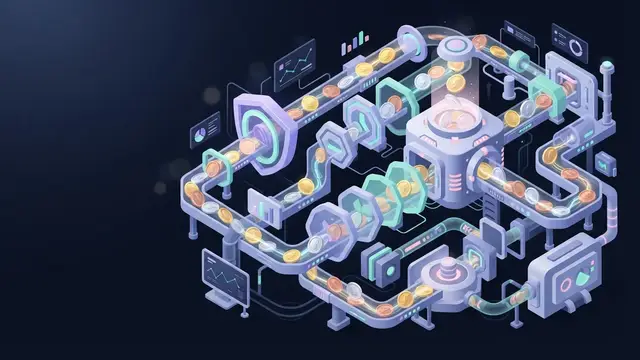
Mastercard is a global payments network: a technology company that routes and processes electronic card transactions between cardholders, the banks that issue their cards, merchants and the merchants’ banks. Mastercard does not issue cards, lend money or hold your deposits. A bank or credit union issues the card and sets its terms. Mastercard supplies the network that lets the card work wherever the brand is accepted, and it is paid fees for that service.
What Is Mastercard?
Mastercard Incorporated is a publicly traded company headquartered in Purchase, New York. It began in 1966 as the Interbank Card Association, a group of banks that wanted a shared card system to compete with BankAmericard (the forerunner of Visa). The association’s card was branded Master Charge and was renamed MasterCard in 1979. The company was owned by its member banks until its 2006 initial public offering. Since then it has been owned by public shareholders and trades on the New York Stock Exchange.
Mastercard calls its proprietary system its “core network.” Member financial institutions around the world use it to offer Mastercard-branded products, including credit cards, debit cards (Maestro is Mastercard’s debit brand) and prepaid cards. As a large-scale payments technology provider, Mastercard is often grouped under fintech, even though its core business predates the term.
How Mastercard Works
A Mastercard transaction follows what is known as the four-party model, with Mastercard in the middle:
- Cardholder: the person paying with the card.
- Issuer: the bank or credit union that issued the card and holds the cardholder’s account or credit line.
- Merchant: the business accepting payment.
- Acquirer: the merchant’s bank or payment processor, which must be able to accept payments on the Mastercard network.
When you tap, insert or enter a card, the acquirer sends an authorization request across Mastercard’s network to the issuer. The issuer checks the account, its available balance or credit and its fraud controls, then approves or declines. Mastercard routes the reply back within seconds. Approved transactions are later batched for clearing, where transaction details are exchanged. Settlement follows: the issuer pays the acquirer, and the acquirer pays the merchant. Funds move from the cardholder’s bank to the merchant’s account. Mastercard coordinates the exchange without lending the money.
The same rails carry card payments made through a digital wallet, where a phone or watch stores a token linked to the underlying Mastercard.
Open loop and the card number
Mastercard cards are open loop: any card carrying the logo works at any merchant that accepts the brand, whichever bank issued it. Every card number begins with an issuer identification number (IIN), which identifies the network and the issuing institution. Mastercard numbers start with 51 to 55 or fall in the 2221 to 2720 range, so the brand can be identified from the number even without a visible logo.
How Mastercard Makes Money
Mastercard reported $6.3 trillion in gross dollar volume in 2020. GDV is the total value of transactions on all Mastercard-branded cards. The company earns most of its revenue from fees charged to issuers and acquirers, many of which are set as a percentage of GDV. Other charges include:
- Switching fees: charged for processing an authorization on the network.
- Co-brand fees: issuers may owe additional fees under co-branded card agreements, and each agreement has its own terms.
Most of Mastercard’s business comes from working with banks and co-brand partners such as airlines, hotels and retailers on open-loop credit cards. The issuer does the underwriting, approves applicants and decides card features: rewards points, cash back, annual fees, 0% introductory offers and the APR on balances. The cardholder’s interest and late fees go to the issuer, not to Mastercard.
Example of a Mastercard Transaction
Hypothetical example; rates are for illustration only, not actual Mastercard or bank pricing.
A customer buys a $100 item with a Mastercard credit card. The merchant’s agreement with its acquirer sets a 2.5% merchant discount.
- Merchant receives: $100 minus $2.50 = $97.50
- Interchange to the issuer (assumed 1.8%): $1.80
- Network fees to Mastercard (assumed 0.15%): $0.15
- Retained by the acquirer: $2.50 minus $1.80 minus $0.15 = $0.55
The cardholder owes the issuer $100 and pays interest only if the issuer’s terms impose it. Mastercard’s share comes from fees on the transaction, not from the cardholder’s balance.
Limitations of Mastercard
- Acceptance is not universal. A card works only where the merchant’s acquirer supports the network, and some merchants decline cards or add surcharges where the law allows.
- Mastercard does not control your card’s terms. Credit limits, fees, rewards, foreign transaction charges and dispute handling are set by the issuer. Questions about a statement go to the bank first.
- Costs to merchants. Merchant discount fees reduce merchants’ margins, which is why some set purchase minimums or offer cash discounts.
Mastercard vs. Similar Payment Systems
The four major U.S. card networks are Mastercard, Visa, American Express and Discover. Visa runs the same open-loop model as Mastercard, with banks issuing the cards. American Express issues many of its own cards and acts as both network and lender, so it earns both network fees and cardholder interest. Discover has also combined issuing with running its network.
Mastercard also differs from services such as PayPal or Venmo. Those are account-based payment apps that can use a linked Mastercard to fund a payment, but they are not card networks themselves.
FAQs
Is Mastercard a bank?
No. Mastercard is a payments network. Banks and credit unions issue Mastercard cards, hold the accounts, extend the credit and set the terms. Mastercard processes the transactions between those institutions and earns network fees.
What bank is my Mastercard from?
Your issuer is the bank named on the card and on your statement. The first digits of the card number (the IIN) also identify the issuing institution.
The Bottom Line
Anyone carrying a Mastercard-branded card should know that the issuing bank or credit union sets the card's limits, fees, rewards and APR and handles disputes, so statement questions go to the bank first. Mastercard earns network fees on transaction volume, not cardholder interest. Merchants pay a merchant discount fee that is split among the issuer, the acquirer and the network, which explains purchase minimums and cash discounts.