What Is BRICS? Full Form, Members and Purpose
By Markets & Investing DeskUpdated Nov 10, 2026
Definition
BRICS is an intergovernmental forum of major emerging economies, named for Brazil, Russia, India, China and South Africa, that coordinates on economic, financial and diplomatic issues.
Key takeaways
- Full form: Brazil, Russia, India, China and South Africa. The earlier term, BRIC, covered only the first four.
- Origin: Jim O'Neill of Goldman Sachs coined "BRIC" in 2001 as an investment thesis. The governments held their first official summit in Yekaterinburg, Russia, on June 16, 2009.
- Current size: 11 full members and, since January 2025, 10 partner countries with a more limited role.
- Purpose: Economic cooperation, reform of the IMF and World Bank, and development finance through the New Development Bank.
- Not a currency: BRICS has no common currency. Members have only proposed one.
BRICS is an intergovernmental grouping of major emerging economies. Its name is an acronym of its five original members: Brazil, Russia, India, China and South Africa. That is the full form of BRICS, and the final “S” stands for South Africa, which joined in 2010. The group has since expanded to 11 full members and 10 partner countries. It is not a treaty alliance, a trade bloc or a currency union. It is a forum in which member governments coordinate on economic, financial and diplomatic questions, mainly with the aim of strengthening their position relative to Western-led institutions.
What Is BRICS?
BRICS describes two things that are easy to blur together. The first is an analytical label: a way of grouping large emerging economies that were expected to grow faster than the developed world. The second is a diplomatic organization: the governments of those countries, plus later entrants, meeting regularly and issuing joint positions.
The label came first. In 2001 O’Neill argued that Brazil, Russia, India and China would grow fast enough to reshape the world economy. The organization followed several years later, once the governments themselves began meeting. Today “the BRICS nations” almost always means the organization and its current membership, not the original four-country investment idea.
BRICS countries list
The 11 full members, in order of joining:
- Brazil (founding member, 2009)
- Russia (founding member, 2009)
- India (founding member, 2009)
- China (founding member, 2009)
- South Africa (2010)
- Egypt (2024)
- Ethiopia (2024)
- Iran (2024)
- United Arab Emirates (2024)
- Saudi Arabia (invited for 2024 and listed by the group as a member, though Riyadh has been slow to confirm full participation publicly)
- Indonesia (January 2025)
The 10 partner countries, granted that status in January 2025, are Belarus, Bolivia, Cuba, Kazakhstan, Malaysia, Nigeria, Thailand, Uganda, Uzbekistan and Vietnam.
Argentina was invited in 2023 but declined after President Javier Milei took office and oriented the country toward the West. Italy is not and has never been a BRICS member; it belongs to the G7, the group of advanced economies BRICS is often compared against.
History of BRICS
From investment thesis to summit
Goldman Sachs produced three reports that built the BRIC idea:
- “Building Better Global Economic BRICs” (2001): O’Neill noted that world GDP was forecast to rise about 1.7% in 2002, while the BRIC economies were expected to grow faster than the G7. He argued global economic policymaking would need to make room for them.
- “Dreaming with BRICs: The Path to 2050” (2003): Dominic Wilson and Roopa Purushothaman projected that the BRIC economies combined could become larger than the G6 (the G7 minus Canada) by 2050. The world’s largest economies would then no longer be its richest per person, because China and India would still have lower income per capita.
- “BRICs and Beyond” (2007): This report examined the sustainability and environmental impact of BRIC growth and introduced the “Next 11.”
The countries’ leaders picked up the idea. Foreign ministers of the four began meeting informally in 2006, leading to the first leaders’ summit in Yekaterinburg in 2009, where they adopted the acronym for their partnership. South Africa joined in 2010, and the name became BRICS.
The five-member decade
From 2010 until 2023, BRICS operated as a five-country group. Its early agenda included positions on regional crises (such as Iran’s nuclear program and conflicts in Libya, Syria and Afghanistan), reforms to voting power at the World Bank and International Monetary Fund, and the creation of a BRICS Interbank Cooperation Mechanism among the members’ development banks.
The most concrete result came at the 2014 summit in Fortaleza, Brazil, where the members agreed to create the New Development Bank (headquartered in Shanghai) to fund infrastructure and sustainable development projects, and a Contingent Reserve Arrangement, a pool of currency commitments members can draw on during balance-of-payments stress. Both were framed as complements to, and partial alternatives for, the World Bank and IMF.
The second wave
At the 2023 Johannesburg summit, BRICS invited six countries: Argentina, Egypt, Ethiopia, Iran, Saudi Arabia and the UAE. All but Argentina were treated as members from January 2024, with Saudi Arabia’s status the least settled. Indonesia joined as a full member in January 2025.
At the October 2024 summit in Kazan, Russia, the group created a partner country category. Partners take part in BRICS activities without the full commitments of membership, a way to accommodate countries interested in the group without enlarging the core decision-making circle.
How BRICS Works
BRICS has no founding treaty and no permanent secretariat. That makes it different from organizations such as the European Union or even the Eurasian Economic Union, which have legal charters and standing bodies.
In practice, it works through:
- An annual leaders’ summit, hosted by the country holding the chair. The chair rotates among members each year, and the host sets much of the agenda.
- Ministerial and working-group meetings on finance, trade, health, energy and other areas, which prepare summit declarations.
- Joint institutions, chiefly the New Development Bank and the Contingent Reserve Arrangement, plus forums such as the BRICS Parliamentary Forum.
- Consensus decision-making. Members agree joint statements collectively, so any one member can effectively block a position.
Because of this structure, BRICS declarations signal shared intent rather than binding policy. A summit statement calling for wider use of local currencies in trade, for example, does not oblige any member to change how its exporters invoice.
Interpreting BRICS figures
The most cited BRICS statistics are aggregates: combined GDP, combined population or share of world trade. Two points shape how to read them.
Membership changes the number. An aggregate BRICS share is just the sum of whichever countries are counted. A figure for “BRICS” in a 2015 report refers to five economies; a figure in 2025 may refer to 11, or to 11 plus partners. Comparing them as one series mixes growth with enlargement.
The measurement basis matters. GDP can be converted at market exchange rates (nominal) or at purchasing power parity, which adjusts for price differences between countries. Emerging economies tend to have lower domestic prices, so their GDP looks larger on a PPP basis. Claims that BRICS has overtaken the G7 typically rely on PPP figures; on a nominal basis the comparison looks different.
The aggregate share is a simple calculation:
BRICS share of world GDP = (sum of member GDPs ÷ world GDP) × 100, with every figure measured on the same basis (nominal or PPP) and for the same year.
Example of BRICS share calculations
The following is a hypothetical example with round numbers chosen to show the mechanics. They are not actual GDP figures.
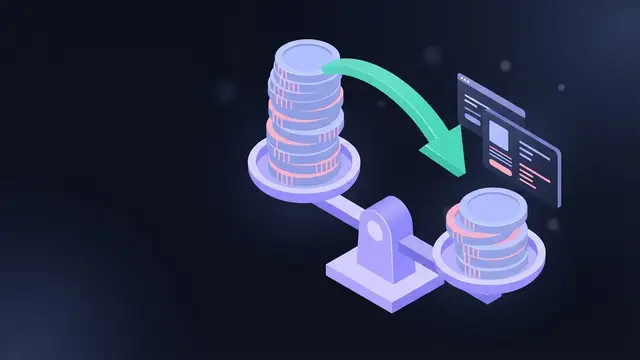
Suppose world GDP in a given year is 100 trillion units, and five original members have a combined GDP of 25 trillion. Their share is:
(25 ÷ 100) × 100 = 25%
Now suppose six new members join, with a combined GDP of 5 trillion. In the same year, with no change in anyone’s economy:
(30 ÷ 100) × 100 = 30%
The bloc’s share rose five percentage points purely because more countries were counted. Nothing grew.
Next, suppose the same 11 countries are measured at purchasing power parity, where their domestic price levels make their combined output equal to 38 trillion out of a PPP world total of 105 trillion:
(38 ÷ 105) × 100 ≈ 36.2%
Same countries, same year, different basis, and the share moves by about six points. Any headline BRICS share depends on the membership list, the year and the conversion method.
Why Is BRICS Important?
Economic weight. The members include the world’s most populous countries (India and China), large commodity exporters (Brazil, Russia, Saudi Arabia, the UAE, Iran) and fast-growing populous economies (Indonesia, Ethiopia, Egypt). Taken together they hold a large share of the world’s people, energy production and output. The early-2000s growth that made the BRIC thesis popular came from lower labor costs, favorable demographics and abundant natural resources during a global commodities boom.
A voice for emerging economies. BRICS presents itself as representing the Global South in global forums. Its long-running demand is that voting shares at the IMF and World Bank reflect the current size of emerging economies rather than the postwar balance of power.
Alternative financing channels. The New Development Bank lends to member and non-member developing countries for infrastructure and climate-related projects. It is far smaller than the World Bank, but it gives borrowers a lender whose governance is controlled by emerging economies.
Payment and currency debates. Several members, particularly Russia and China, have pushed for trade settlement in local currencies and for payment systems that do not route through Western banks. This is the source of most discussion about BRICS and the dollar, covered below.
BRICS and the U.S. Dollar
BRICS does not have a common currency, and creating one would require members to give up control over their own monetary policy, something none has shown willingness to do. Brazil, India and China have very different economies, exchange-rate regimes and capital controls, and India and China are strategic rivals.
What exists instead are narrower efforts: bilateral agreements to settle some trade in local currencies, and discussions about linking payment systems. These can reduce how much dollar funding a specific trade flow needs. They do not replace the dollar’s roles as the main reserve asset held by central banks, the dominant invoicing currency and the currency of deep, liquid government bond markets. Displacing those roles would take a credible alternative asset that other countries want to hold, and no BRICS currency offers that today. Reduced confidence in U.S. policy could make diversification away from the dollar more attractive over time, but that force is separate from BRICS institutions themselves.
Limitations of BRICS
Divergent interests. Members range from democracies to autocracies and from oil exporters to oil importers. They differ on economic and financial transparency and governance, and some have regional disputes with each other, notably the India and China border tensions, and the strained relationship between Iran and Gulf members. Consensus decision-making means these differences can stall joint action.
China’s outsized weight. China’s economy is larger than the rest of the original members combined, so aggregate BRICS statistics are heavily driven by one country. A strong “BRICS” growth figure can mostly reflect Chinese growth.
No binding commitments. Without a treaty or secretariat, BRICS cannot enforce agreements. Summit declarations often outline aspirations that are carried out slowly or not at all.
The investment thesis faltered. Growth slowed after the 2007 to 2008 financial crisis and the 2014 oil price collapse, which hit commodity-dependent Brazil and Russia especially hard. By 2015, funds built around the acronym were closing or merging. Goldman Sachs folded its own BRICS fund into its broader Emerging Markets Equity Fund after the fund lost 88% of its assets from a 2010 peak and about 21% over five years. Critics had long argued the acronym was partly marketing. The diplomatic organization outlived the investment product, but grouping countries under one label does not make their economies move together.
BRICS vs. similar terms
- BRICS+ or BRICS Plus: An informal name for the enlarged group, sometimes including partner countries.
- G7: Seven advanced economies (Canada, France, Germany, Italy, Japan, the U.K., the U.S.). BRICS is frequently framed as its emerging-market counterweight.
- G20: A broader forum of major economies that includes both G7 and original BRICS members.
- Next 11: A Goldman Sachs label from 2007 for 11 further emerging economies with growth potential. Like the original BRIC, it was an analytical grouping, not an organization. Egypt, Iran and Indonesia from that list later became BRICS members.
- Trade bloc: BRICS is not a free trade area or customs union. Members keep their own tariffs and trade agreements, unlike in blocs such as Mercosur or the EU.
The Bottom Line
BRICS matters most to readers following emerging markets, development finance and debates over the dollar's global role. The group coordinates positions and runs the New Development Bank, yet it has no treaty, no common currency and no power to enforce agreements. Any headline BRICS share of world GDP depends on which members are counted, the year and whether figures use nominal or PPP terms, so check those details before comparing numbers.