Primary vs. Secondary Market: What's the Difference?
By Markets & Investing DeskUpdated Nov 10, 2026
Definition
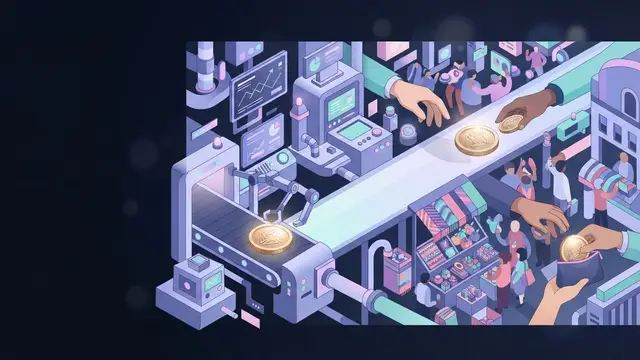
The primary market is where a security is first sold and the issuer receives the money. The secondary market is where investors later trade it among themselves, and the issuer gets nothing.
Key takeaways
- Primary transactions create new securities and raise capital for the issuer: IPOs, follow-on offerings, rights issues, private placements and new bond issues.
- Secondary transactions move existing securities between investors. The everyday "stock market" (NYSE, Nasdaq and exchanges worldwide) is secondary.
- Issuers and underwriters set primary prices; supply and demand set secondary prices.
- Secondary market liquidity and price discovery make investors more willing to buy in the primary market.
- Secondary trading includes auction markets, dealer markets, over-the-counter (OTC) trading and the institutional third and fourth markets.
The primary market is where a security is sold for the first time, with the issuer (a company, government or agency) receiving the money. The secondary market is where that security changes hands afterward, between investors, and the issuer receives nothing from the trade. When a company sells new shares in an initial public offering (IPO), that sale happens in the primary market. When you later buy those shares through a broker on the New York Stock Exchange (NYSE) or Nasdaq, you are trading in the secondary market, and the seller is another investor.
What separates the two is not the venue, the investor or the type of security. It is who receives the cash. If the money goes to the issuer, the transaction is primary. If it goes to another holder, the transaction is secondary.
Primary vs. Secondary Market: Key Differences
Purpose. The primary market exists to raise capital. A company issuing stock is raising equity capital; a company or government issuing bonds is raising debt capital. The secondary market exists to let investors buy, sell and price securities that already exist. It reallocates ownership but does not, by itself, fund the issuer.
Participants. A primary deal involves three groups: the issuer, the underwriters (usually investment banks) that structure, price and distribute the offering, and the investors who buy the new securities. Large institutions such as pension funds, mutual funds and hedge funds typically receive most of an IPO allocation, so retail investors play a smaller role. Secondary trading involves individual investors, institutions, traders, brokers and market makers. Once issuance is complete, the issuer is generally out of the picture.
Pricing. A primary offering has a fixed issue price (or, for bonds, a set coupon and offering price) negotiated before the sale. Secondary prices change continuously as orders arrive.
Frequency. A given security is issued once. It can be traded in the secondary market an unlimited number of times until it matures, is redeemed or is delisted.
Instruments. Both markets handle stocks and bonds. The secondary market also hosts instruments that are not capital-raising securities at all, such as listed options and futures, which derive their value from other assets.
Regulation (U.S.). In the United States, the Securities Act of 1933 governs primary offerings: securities sold to the public must be registered with the Securities and Exchange Commission (SEC) and accompanied by a prospectus, unless an exemption applies. The Securities Exchange Act of 1934 governs secondary trading: exchanges, brokers, dealers and the ongoing reporting obligations of public companies. Other countries split the rules differently, but most distinguish between disclosure at issuance and conduct of trading afterward.
How the Primary Market Works
- The issuer decides how much capital it needs and in what form.
- It hires one or more underwriters, which assess demand and help structure the deal.
- The issuer prepares disclosure documents (a registration statement and prospectus for a U.S. public offering) and obtains regulatory clearance.
- The underwriters market the offering to investors, often through a roadshow, and gather indications of interest.
- The issuer and underwriters set the final price and allocate the securities.
- Investors pay, the issuer receives the proceeds minus underwriting fees, and the securities begin trading in the secondary market.
In a firm commitment underwriting, the banks buy the whole issue from the issuer and resell it, taking the risk that it will not sell at the offering price. In a best efforts deal, the underwriters only agree to sell as much as they can, and the issuer bears the risk of a shortfall.
Types of Primary Offerings
Initial public offering (IPO). A private company sells shares to the public for the first time, and the proceeds become part of its equity capital.
Follow-on public offering (FPO). A company that is already public sells additional new shares. Also called a seasoned offering, it is still a primary market transaction because the company issues new shares and receives the money. Because the share count rises, existing holders are diluted, which lowers earnings per share unless the new capital earns enough to offset it.
Rights offering. Existing shareholders receive rights to buy new shares, usually at a discount, in proportion to what they already own. Holders who exercise keep their ownership percentage; those who do not are diluted. The new shares are primary even though the company is already trading in the secondary market.
Private placement. The issuer sells securities directly to a limited group of investors, such as banks, hedge funds or wealthy individuals, without a public offering. In the U.S., these sales typically rely on exemptions from registration, and buyers may face restrictions on resale.
New bond issues. Corporations, municipalities and national governments issue new debt in the primary market. A Treasury auction is a primary market sale; the U.S. government receives the proceeds. New bonds generally carry coupons that reflect prevailing interest rates at the time of issue, so a new bond may pay more or less than older bonds from the same issuer.
Primary Shares vs. Secondary Shares in an Offering
A single offering can contain both. Primary shares are newly created and sold by the company, which receives the proceeds. Secondary shares are existing shares sold by current holders (founders, early investors, private equity funds) as part of the same deal; those proceeds go to the sellers, not the company. A “secondary offering” in this sense does not raise new capital and does not dilute existing holders, because the share count stays the same. The prospectus states how many shares of each kind are included, which tells you how much of the money actually funds the business.
How the Secondary Market Works
When people say “the stock market,” they almost always mean the secondary market. If you buy shares of Amazon (AMZN) through a brokerage account, you are buying from another investor who owns Amazon stock. Amazon is not a party to the trade and receives none of the money. Prices move as buyers and sellers react to earnings, news, interest rates and valuation measures such as the P/E ratio.
The secondary market still matters to issuers. A liquid market makes investors more willing to buy new securities, because they know they can sell later. The market price also tells the company what its stock is worth, which shapes the terms of any future offering, acquisition paid in stock or employee compensation.
Bonds follow the same logic. A bond pays its par value at maturity, but maturity may be years away. A holder who needs cash sooner can sell the bond in the secondary market, and the price depends on how its coupon compares with current rates.
Hypothetical example. You buy a newly issued $1,000 bond paying a 5% coupon ($50 a year). Two years later, comparable new bonds pay 4%. Your bond’s $50 annual payment is now more attractive than the $40 a new bond would pay, so buyers will pay more than $1,000 for it, and you could sell at a gain. If rates had risen to 6% instead, your bond would sell below par. The exact price depends on remaining maturity and the yield buyers require, but the direction follows from the coupon comparison.
Auction Markets
In an auction market, buyers and sellers bring their orders to a central venue and publicly state the prices at which they will trade. The highest price a buyer will pay is the bid; the lowest price a seller will accept is the ask. Trades occur when bids and asks meet. The NYSE is the standard example of an auction market, though it operates largely electronically today.
Dealer Markets
In a dealer market, participants connect through electronic networks rather than one central auction. Dealers, called market makers, hold an inventory of a security and post firm bid and ask quotes, standing ready to buy from or sell to other participants. They earn the spread between the two prices. Nasdaq has traditionally been described as a dealer market, and much bond trading, including corporate and municipal bonds, takes place through dealers rather than exchanges.
The OTC Market
Over-the-counter originally described trading outside an exchange through networks of dealers. In the 1920s, shares of companies not listed on an exchange (“unlisted” stocks) were sold across the counter in brokerage offices. In 1971, the National Association of Securities Dealers (NASD) launched Nasdaq to bring automated quotations and more liquidity to dealer-traded stocks. Nasdaq is now a registered national securities exchange with listing standards, though its dealer-based heritage is why it is sometimes still grouped with OTC trading. Today, “OTC” generally means securities not listed on a stock exchange. In the U.S., these have historically been quoted on the OTC Bulletin Board and the pink sheets, which are quotation and pricing services rather than exchanges.
Important: Companies quoted only OTC face far lighter listing and disclosure requirements than exchange-listed companies. Many OTC securities are penny stocks or shares of very small companies, and some trade thinly, so quotes can be wide and information scarce. OTC trading is still secondary market trading: you buy from another holder, not the company.
Third and Fourth Markets
The numbered market labels are a classification of trading venues, mainly relevant to institutions:
- First market: exchange-listed securities traded on the exchange.
- Second market: used by some writers for OTC trading in unlisted securities. (This is a venue label and is not the same thing as “the secondary market,” which covers all of these.)
- Third market: exchange-listed securities traded over the counter between broker-dealers and large institutions, away from the exchange itself.
- Fourth market: large blocks of securities traded directly between institutions, typically through electronic networks, without a broker-dealer in the middle.
These channels let institutions move large positions at lower cost and with less risk that a big exchange order would push the price against them. Individual investors rarely have direct access, so these markets matter to them mainly through the prices and liquidity they affect.
Worked Example: One Company, Both Markets
Hypothetical. Company ABC hires a group of underwriters for its IPO. They set an issue price of $15 and sell 10 million new shares.
- Primary market: Investors pay $15 × 10 million = $150 million. ABC receives that amount minus the underwriting fee. Assuming, for illustration only, a 7% fee, the underwriters keep $10.5 million and ABC receives $139.5 million to fund operations.
- Secondary market, day one: The shares begin trading on an exchange. Demand is strong and the price rises to $20. An investor who bought at $15 and sells at $20 makes $5 per share, paid by the buyer. ABC receives nothing, even though its stock rose.
- Later: The price settles at $18. A new investor who missed the IPO buys 100 shares from another holder for $1,800. Again, ABC is not involved.
- Two years on: ABC needs more capital and sells 2 million new shares in a follow-on offering at $25. This is primary again: ABC receives the proceeds (less fees), and the share count rises from 10 million to 12 million, diluting existing holders’ ownership from a combined 100% to about 83%.
How This Affects You as an Investor
Buying in the primary market means paying the issue price, usually through a broker that has an allocation. You avoid paying the day-one secondary price, but popular IPOs are often allocated mostly to institutions, and you have no trading history to judge from. For new bonds, buying at issue means buying at the offering price, with the coupon set at current rates and typically without a dealer markup. Buying bonds in the secondary market gives you a wider choice of maturities and issuers, but your yield depends on the price you pay, and dealer spreads are built into that price.
Buying in the secondary market gives you a price history, analyst coverage, financial statements and liquidity. You can buy or sell during market hours in whatever quantity you want, but you pay the current market price, plus the bid-ask spread and any commission. Almost all individual investing, including buying index funds that track the S&P 500, happens here.
The same distinction applies to private investments. Investing directly in a private company’s funding round is primary: the company issues new shares to you. Buying existing shares from an employee or early investor in a private company is a secondary transaction, even though no exchange is involved. In lending, “primary” investors fund a loan when it is originated, while “secondary” buyers purchase an existing loan or credit position from the original lender.
Limitations and Common Confusions
“Secondary market” is not the same as “secondary offering.” The secondary market refers to all trading among investors. A secondary offering is a sale of existing shares by current holders through a registered deal, though the term is also used loosely for any follow-on offering, including ones that issue new primary shares. Check the prospectus to see who gets the money.
OTC does not mean “only unlisted.” OTC trading covers unlisted stocks, but the third market involves exchange-listed securities traded off-exchange, and most bonds trade over the counter.
The line between categories can blur. Direct listings, where a company lists existing shares without selling new ones, create a secondary market without a traditional primary offering. Some offerings combine primary and secondary shares in one transaction.
The Bottom Line
The distinction matters to any investor trying to understand where their money goes. Most individual investing, including buying stocks and index funds through a broker, happens in the secondary market, where you pay the market price plus spreads and commissions. When an offering or private deal appears, check the prospectus or terms to see whether the cash funds the issuer or goes to existing holders.