What Is a SPAC (Special Purpose Acquisition Company)? Examples and Risks
By Markets & Investing DeskUpdated Nov 10, 2026
Definition
A SPAC, or blank check company, is a listed shell that raises cash in an IPO, holds it in trust, and must merge with a private company by a deadline or liquidate.
Key takeaways
- Shareholders can generally redeem shares for a pro rata slice of the trust before the merger closes.
- Sponsors typically receive about 20% of shares for a nominal sum, which dilutes public holders from day one.
- Most SPACs must complete a deal within roughly 18 to 24 months or return the trust money to shareholders.
- SEC rules adopted in 2024 expanded disclosure and removed the safe harbor that had protected SPAC projections.
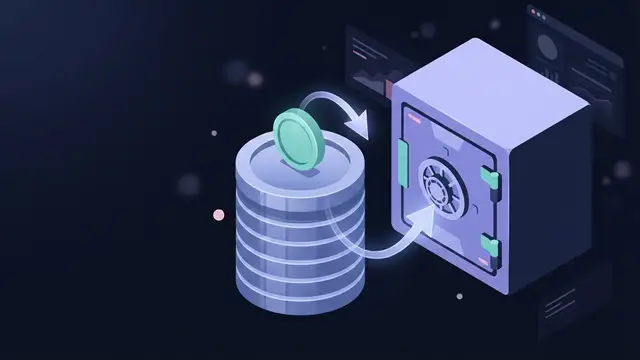
A special purpose acquisition company (SPAC) is a publicly listed shell company that has no business operations of its own. It exists to raise money through an initial public offering (IPO), hold that money in trust, and then use it to buy or merge with a private company within a fixed deadline. When the merger closes, the private company becomes publicly traded without running its own IPO. If no deal closes in time, the SPAC liquidates and returns the trust money to its shareholders. Because investors commit cash before they know what the company will buy, SPACs are also called blank check companies.
What Is a SPAC?
A SPAC is a company whose only purpose is to acquire another company. At the IPO stage it owns no factories, products or customers. What investors buy is a claim on a pool of cash and a bet on the people running the vehicle, known as the sponsors.
Sponsors are usually investors, former executives, private equity managers or other financiers with experience in a particular industry. They form the SPAC, pay its setup costs, file the regulatory paperwork and lead the search for a target. A SPAC often states the sector it intends to pursue, such as technology, energy or consumer brands, but it is not supposed to have a specific target lined up in undisclosed talks before its IPO.
The money raised in the IPO goes into an interest-bearing trust account. That cash can be released only to complete an acquisition or to return to shareholders. In some structures a portion of the interest earned on the trust can be used as working capital to fund the search.
SPACs have a limited window to finish a deal. The deadline is set in the SPAC’s governing documents and is commonly described as 18 to 24 months, with an outer range of about two to three years. If the clock runs out, the SPAC is liquidated.
How a SPAC Works
The SPAC process step by step
- Formation. Sponsors create the SPAC and file a registration statement (Form S-1) with the U.S. Securities and Exchange Commission (SEC).
- IPO. The SPAC sells shares to the public, often as units that combine a share with a warrant or a fraction of one, which is an option to buy more shares later at a set price.
- Trust and listing. IPO proceeds go into the trust account, and the shares begin trading on a stock exchange.
- Target search. Sponsors look for a private company to acquire, usually within their stated sector.
- Negotiation and due diligence. The two sides agree on the target’s valuation and how much of the combined company each group will own.
- Announcement. The SPAC announces the planned merger, the target’s identity and key terms. This is often the first point at which shareholders learn what their money will buy.
- Additional financing. A private investment in public equity (PIPE) may add capital from institutional investors, usually to replace cash that leaves the trust through redemptions.
- Proxy statement and vote. The SPAC files a proxy statement with the SEC describing the target, its finances and the deal terms. Shareholders vote on the merger and decide whether to keep or redeem their shares.
- De-SPAC closing. If approved, the merger, called the de-SPAC transaction, closes and the combined company begins trading under a new ticker symbol.
- Life as a public company. The combined company files regular SEC reports and follows all public company rules. Former sponsors often take board seats or advisory roles. A lockup period, typically six to 12 months, usually bars sponsors and certain insiders from selling their shares.
Redemption rights
Redemption is the feature that makes a SPAC different from an ordinary stock purchase. Before the merger closes, a public shareholder can generally choose to hand back shares in exchange for a pro rata share of the trust account. That protects the original cash investment but forfeits any upside from the deal.
Redemptions also shape the merger itself. Every redeemed share removes cash from the trust, so heavy redemptions can leave the merged company with much less money than the SPAC raised. That gap is why PIPE financing is common in de-SPAC deals, and a high redemption rate can signal that the SPAC’s own shareholders are skeptical of the target.
Worked example: how sponsor shares and redemptions affect value
The figures below are a hypothetical example, not the terms of any real SPAC, and ignore underwriting fees, deal costs, warrants and trust interest.
The setup:
- The SPAC sells 20 million public shares at $10 each, placing $200 million in trust.
- The sponsor holds 5 million founder shares, bought for a nominal sum. That equals 20% of the 25 million shares outstanding after the IPO, matching the typical promote size.
Before any deal, the trust holds $200 million against 25 million shares, which is $8.00 of cash per share. Public investors paid $10 per share, yet the sponsor’s shares already claim part of the same pool. That built-in dilution exists from day one.
The deal:
- The SPAC agrees to merge with a private company valued at $500 million. The target’s owners receive 50 million new shares, priced at $10 each.
- 60% of public shareholders redeem. 12 million shares are cashed out at $10, and $120 million leaves the trust. 8 million public shares and $80 million remain.
- A PIPE investor adds $50 million for 5 million shares at $10.
After closing:
| Holder | Shares (millions) | Ownership |
|---|---|---|
| Remaining public holders | 8 | 11.8% |
| Sponsor | 5 | 7.4% |
| PIPE investors | 5 | 7.4% |
| Target’s former owners | 50 | 73.5% |
| Total | 68 | 100% |
The merged company receives $130 million in new cash ($80 million from the trust plus $50 million from the PIPE). The sponsor’s 5 million shares, which cost almost nothing, are worth $50 million if the stock trades at $10. If the stock later falls to $5, public holders who stayed in have lost half their money, while the sponsor still holds $25 million in stock against a nominal cost.
This is why the sponsor’s incentive is to close some deal before the deadline: a completed merger, even a weak one, turns founder shares into real value, while liquidation leaves the sponsor with nothing. For remaining investors, the crucial number is the $500 million valuation, which can be tested with tools such as enterprise value comparisons with listed peers.
SPAC vs. IPO and Other Ways to Go Public
SPAC vs. traditional IPO
In a traditional IPO, an existing operating company sells shares to the public for the first time. Investment banks underwrite the offering, and the company publishes a prospectus describing its business and finances. In a SPAC deal, the shell company goes public first with no operations to disclose, and a separate private company later becomes public by merging into it.
| Feature | Traditional IPO | SPAC merger |
|---|---|---|
| Who goes public first | The operating company | A shell company with no operations |
| What IPO investors know | The business, financials and risks | The sponsors and target sector, not the target |
| How price is set | Underwriters gauge investor demand | Negotiated between sponsor and target |
| Typical time to listing | Can exceed a year | Can be a few months after a target is found |
| Investor exit before the deal | Not applicable | Redemption from the trust |
SPAC vs. de-SPAC
The two terms describe different stages. The SPAC is the shell company while it holds cash and searches for a target. The de-SPAC is the merger transaction and, by extension, the company that emerges from it. A “de-SPAC stock” is the merged operating company trading under its new ticker.
SPAC vs. shell company and reverse merger
Every SPAC is a shell company, but not every shell company is a SPAC. A shell company is any entity with no or nominal operations. A SPAC is the specific type that raised cash in an IPO, holds it in trust, faces a deadline and gives investors redemption rights. A reverse merger is the broader technique in which a private company merges into an existing public entity to obtain a listing. A de-SPAC is a reverse merger into a SPAC rather than into a dormant shell left over from a former business.
SPAC vs. direct listing
In a direct listing, a private company lists its existing shares on an exchange without issuing new shares through underwriters. Coinbase, for example, went public through a direct listing in 2021. A direct listing does not necessarily raise new capital, whereas a SPAC merger delivers cash from the trust and any PIPE to the target.
Why Companies and Investors Use SPACs
For the private company
- Speed. A SPAC merger can take a few months, compared with a year or more for a conventional IPO.
- Price negotiation. The target’s owners negotiate valuation directly with a sponsor who faces a deadline, which may let them win a premium price.
- More capital. Trust cash plus PIPE commitments can exceed what the company might raise in its own IPO.
- Experienced backers. Prominent sponsors can bring management experience, contacts and market visibility.
- Use of projections. SPAC deals were historically marketed with forward-looking financial projections that traditional IPOs generally avoided, which appealed to companies with little revenue but large ambitions. The 2024 SEC rules narrowed that advantage.
For investors
Most retail investors cannot buy into promising private companies before they list. A SPAC lets them invest alongside sponsors who specialize in finding such companies, with redemption as an exit if they dislike the chosen target, which ordinary stock buyers do not have.
Risks and Limitations of SPACs
Weak historical returns
The main criticism of SPACs is that merged companies have generally failed to deliver the returns implied when deals were promoted. Research on SPACs that merged between January 2019 and June 2020 found mean returns of negative 12.3% over six months and negative 34.9% over 12 months following the merger announcement. Later results were worse: the AXS De-SPAC ETF (DSPC), which tracked an index of merged de-SPAC companies, returned about negative 74% in 2022. The fund last traded on January 20, 2023, and distributed its remaining proceeds a week later.
Researchers attribute this underperformance to three main factors:
- Misaligned incentives. The sponsor promote, roughly 20% of shares for a minimal investment, lets sponsors profit even if the stock collapses. Academic work has described this as a “perverse incentive” to complete any deal before the deadline.
- Deadline pressure. As the clock runs down, the choice for sponsors becomes a weak deal or no payoff, which can push them toward overpaying or accepting a poor target.
- Target quality. SPACs have tended to acquire riskier or lower-quality companies, some of which might not have met the standards of a traditional IPO.
Dilution
Founder shares, warrants, underwriting fees and deal costs all reduce the cash and value behind each public share. Holders who stay through the merger absorb that dilution; those who redeem avoid it but give up any upside.
Deals that fall through
Announcing a target does not guarantee a merger. Deals can be voted down, renegotiated, blocked by regulators or abandoned when financing disappears, and many SPACs in progress each year never complete one.
Limited information at the IPO
SPAC IPO buyers commit money knowing little more than who the sponsors are and what sector they plan to target. The real investment decision comes later, at the announcement and vote, often based on the target’s own projections. A discounted cash flow model can test whether those projections support the agreed valuation, but the output is only as good as the forecasts that go into it.
Regulation of SPACs
The rapid growth of SPACs, and their use as an entry point for some questionable companies, drew SEC scrutiny. In early 2024 the SEC adopted rules covering SPACs, shell companies and financial projections. Then-SEC Chair Gary Gensler argued that an alternative route to public markets should not mean weaker investor protections, and said the rules would substantially align SPAC requirements with those for traditional IPOs in disclosure, the use of projections and issuer obligations.
The main changes include:
- Expanded disclosure. SPACs must provide detailed information about sponsor compensation, conflicts of interest and potential dilution.
- Projection standards. Companies that present financial forecasts must disclose all material assumptions and bases behind them.
- Co-registrant liability. The target company in a de-SPAC transaction must sign the registration statement as a co-registrant, making it legally responsible for the accuracy of the disclosures, as an IPO issuer would be.
- No safe harbor for projections. SPACs and other blank check companies can no longer rely on the Private Securities Litigation Reform Act safe harbor that shields certain forward-looking statements from liability, which exposes optimistic projections to greater legal risk.
A Brief History of SPACs
Blank check companies emerged in the 1990s, on the fringes of the dot-com IPO wave, in speculative areas such as oil and gas exploration where a traditional IPO was difficult. SPACs gained popularity before the 2007 to 2009 financial crisis, then faded. The early 2020s brought a record boom, driven by market volatility, demand for faster and potentially cheaper listings, and high-profile sponsors, including major banks such as Goldman Sachs, Credit Suisse and Deutsche Bank, retired senior executives and celebrities. Activity cooled sharply afterward as poor returns and new regulation took effect.
Examples of SPACs
Virgin Galactic and Social Capital Hedosophia
Venture capitalist Chamath Palihapitiya became one of the best-known faces of the SPAC boom. His SPAC, Social Capital Hedosophia Holdings, bought a 49% stake in Richard Branson’s Virgin Galactic for $800 million and took the space tourism company public in 2019, now trading as SPCE.
Pershing Square Tontine Holdings
Bill Ackman, founder of Pershing Square Capital Management, sponsored Pershing Square Tontine Holdings, which raised $4 billion in its offering on July 22, 2020. That made it the largest SPAC ever by amount raised.
Trump Media and Digital World Acquisition Corp.
In October 2021, Trump Media & Technology Group, parent of the Truth Social platform, announced plans to go public by merging with Digital World Acquisition Corp. (DWAC), a SPAC, in a deal that valued Trump Media at $875 million. The SEC and the Financial Industry Regulatory Authority (FINRA) investigated whether DWAC had held undisclosed talks with Trump Media before its IPO, a potential securities law violation. The investigations delayed the merger, which closed in March 2024, and the combined company began trading as DJT on March 26, 2024.
Other companies that went public through SPACs
Other well-known companies that listed by merging with a SPAC include DraftKings (DKNG), the digital sports entertainment and gaming company; QuantumScape (QS), the battery technology developer; and Opendoor Technologies (OPEN), the online real estate platform. Many SPAC targets were venture-backed growth companies, some with unicorn valuations as private firms.
How to Invest in a SPAC
SPAC shares, units and warrants trade on stock exchanges and can be bought through a regular brokerage account. Exchange-traded funds holding SPACs or de-SPAC companies have also existed, though DSPC shut down in 2023.
What an investor actually owns depends on the stage:
- Before a target is announced, a SPAC share is mainly a claim on the trust, plus an option on whatever deal the sponsor finds. Paying well above the trust value per share means paying a premium for the sponsor’s deal-making.
- After an announcement, the share price reflects the market’s view of the specific target. This is the point to read the proxy statement, the valuation, the projections and their assumptions, and the dilution and sponsor compensation disclosures.
- At the vote, the holder decides whether to redeem for the trust value or stay in and become a shareholder of the merged company.
- After closing, the stock is an ordinary operating company, subject to lockup expirations when sponsors and insiders may begin selling.
What Happens If a SPAC Doesn’t Merge?
If a SPAC misses its deadline, it liquidates: the trust money is returned to public shareholders and the SPAC ceases to exist. Founder shares and warrants typically become worthless, and sponsors lose what they spent on setup and the search. Public holders who bought at the trust value roughly get their capital back. That asymmetry is the source of the deadline pressure described above.
The Bottom Line
A SPAC is a listed shell company that raises cash first and finds a business to buy later. It offers private companies a faster route to market and investors early access with redemption as a safety valve. But its sponsor promote, deadline and dilution work against shareholders who stay in, and the SEC’s 2024 rules now hold SPAC deals much closer to traditional IPO standards.