What Is Moral Hazard? Meaning and Examples
By Markets & Investing DeskUpdated Nov 10, 2026
Definition
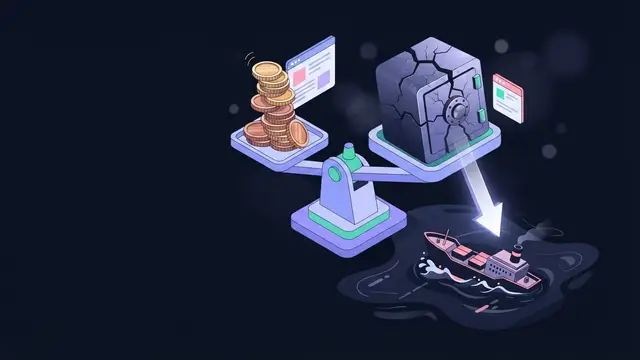
Moral hazard is the risk that a party shielded from a loss acts less carefully or takes bigger risks, because someone else bears most of the cost if things go wrong.
Key takeaways
- Moral hazard requires two conditions: risk is shifted to another party, and behavior is hidden or costly to monitor.
- A $200 deductible on a $1,000 phone restores some incentive to be careful while the insurer covers most of the loss.
- Some brokers before 2008 earned commissions on loan volume while investors carried the losses from borrower defaults.
- Moral hazard involves hidden action after an agreement, while adverse selection involves hidden information before it.
Moral hazard is the risk that a party protected from the consequences of a risk will behave less carefully, or take bigger risks, because someone else bears most of the cost if things go wrong. It describes a change in behavior after an agreement is made: insurance, a loan, an employment contract or a government guarantee shifts losses to another party, and the protected party loses some of its incentive to avoid them.
The word “moral” does not mean the behavior is criminal. It means the decision follows the party’s own benefit rather than the spirit of the agreement.
How Moral Hazard Works
Moral hazard needs two conditions.
- Risk is shifted. A contract moves some or all of a potential loss from one party (the insured, the borrower, the employee, the bank) to another (the insurer, the lender, the employer, taxpayers).
- Behavior is hidden or costly to monitor. The party carrying the risk cannot fully see or control what the protected party does once the deal is in place.
When both hold, the protected party compares its private cost of being careful with its private cost of a loss. Because the contract has shrunk that second number, the rational level of care falls. Economists call this “hidden action,” and it is a form of the principal-agent problem: the principal (insurer, lender, employer) relies on an agent whose interests are not fully aligned with its own.
Moral hazard can also take a more active form. A party nearing the end of a contract, or one in financial trouble, may take unusual gambles in an attempt to earn a profit before the contract settles, because the gains are its own and many of the losses fall elsewhere.
A worked example
Consider a hypothetical phone owner with a $1,000 phone.
- No insurance: if the phone breaks, the owner pays $1,000. That cost motivates a case, a screen protector and careful handling.
- Insurance with no deductible: a broken phone costs the owner $0. The incentive to be careful largely disappears.
- Insurance with a $200 deductible: a broken phone costs the owner $200. Some incentive returns, while the insurer still covers most of the loss.
The insurer priced the policy assuming a certain claim rate. If insured owners become less careful, claims rise above that assumption. Insurers then raise premiums for everyone who buys the coverage, including the careful customers.
Examples of Moral Hazard
Insurance
Insurance is the classic setting, and the term itself comes from the insurance business. A homeowner with full coverage may be slower to fix faulty wiring or a leaking roof. A driver with comprehensive auto insurance may park in riskier places. In health care, economists such as Kenneth Arrow and Mark Pauly analyzed in the 1960s how coverage can raise the use of medical services, because insured patients face a lower price at the point of care.
Mortgage lending before 2008
In the years before the housing bubble burst, some mortgage brokers earned commissions based on the number of loans they originated, with little regard for whether borrowers could repay. Many of those loans were packaged and sold to investors. Because the originating lender passed the default risk on, the broker and lender gained from volume while investors carried the losses when borrowers defaulted.
Bailouts and “too big to fail”
If a financial firm expects the government to rescue it, it can pursue higher-risk, higher-return strategies: profits go to shareholders and managers, while a collapse is partly paid for by taxpayers. The rescues of 2008 renewed debate over this incentive. Deposit insurance raises a related concern, since insured depositors have less reason to watch how their bank manages risk, which is one reason banks face capital and supervisory rules.
Employment
An employee who drives a company car and never pays for repairs or fuel may drive it harder than a personal vehicle. A salaried worker who is rarely supervised may put in less effort. A manager paid large bonuses on short-term results may take risks whose costs appear after the bonus is paid.
How Moral Hazard Is Managed
No contract removes moral hazard entirely, but several tools reduce it:
- Cost sharing. Deductibles, copays and coinsurance keep part of each loss with the insured.
- Collateral and down payments. A borrower who stands to lose a house or a deposit has a reason to repay and to avoid reckless use of the funds.
- Loan covenants and contract terms. Lenders restrict how money is used and require financial reporting.
- Monitoring. Audits, inspections, telematics in cars and regular reviews make hidden actions more visible.
- Incentive pay. Equity stakes, deferred bonuses and clawbacks tie an agent’s rewards to long-term outcomes.
- Penalties and regulation. Rules that make abusive behavior punishable, and capital requirements for banks, limit how much risk can be shifted to others.
The common thread is “skin in the game”: keeping enough of the downside with the party whose behavior drives the risk.
Moral Hazard vs. Adverse Selection
These two terms both stem from asymmetric information, where one side knows more than the other, and they are often confused.
| Moral hazard | Adverse selection | |
|---|---|---|
| Timing | After the agreement | Before the agreement |
| Problem | Hidden action: behavior changes once protected | Hidden information: higher-risk parties are more eager to sign up |
| Insurance example | An insured driver starts driving carelessly | A person who knows they have a high-risk lifestyle buys a large life insurance policy |
| Typical remedies | Deductibles, monitoring, incentive pay | Screening, underwriting, risk-based pricing |
A single market can face both. A health insurer may attract sicker applicants (adverse selection) and then see its policyholders use more care than they would if paying full price (moral hazard).
Limitations of the Concept
Moral hazard is a statement about incentives, not proof of misconduct. Higher claims or losses after coverage begins may reflect legitimate use, such as patients finally getting needed treatment, rather than carelessness. Separating the two is difficult in practice.
The concept also does not measure how large the effect is; that depends on the market and the design of the contract. Remedies carry costs too: high deductibles can push people to skip necessary care, and heavy monitoring is expensive. Policymakers weigh the cost of moral hazard against the benefits of protection, such as preventing bank runs or financial ruin from a single accident.
FAQs
Is moral hazard illegal?
Usually not. Taking less care because you are insured, or taking more risk because losses fall on others, is typically legal. It crosses into fraud only when it involves deception, such as deliberately damaging insured property or lying on a loan application.
The Bottom Line
Moral hazard matters to insurers, lenders, employers, regulators and anyone signing a contract that shifts losses to someone else. Tools such as deductibles, collateral, monitoring and deferred pay reduce it by keeping enough of the downside with the party whose behavior drives the risk. Each remedy carries its own costs, so contract designers and policymakers weigh moral hazard against the real benefits of protection.