What Is Crowdfunding? Models and Top Platforms
By Markets & Investing DeskUpdated Nov 10, 2026

Definition
Crowdfunding raises money for a project, business, cause or person by collecting small contributions from many people, usually through an online platform, instead of one large backer.
Key takeaways
- Backers may donate, receive a reward, buy equity or lend, and the model sets repayment, legal rules and risk.
- Under all-or-nothing funding, a campaign that misses its goal gets nothing and backers are not charged.
- Flexible funding lets campaigners keep a shortfall, but they still owe rewards to every backer.
- Reported platform fees range from about 5% to 12%, and some sites add processing charges on top.
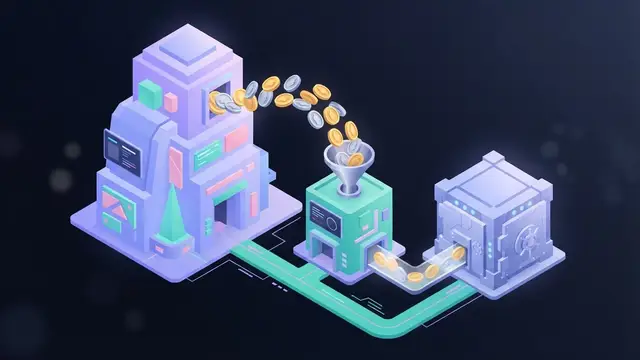
Crowdfunding is raising money for a project, business, cause or person by collecting small contributions from many people, usually through an online platform. Instead of persuading one bank, angel investor or venture capital fund to provide most of the money, the campaigner pitches directly to the public and lets many backers each cover a small share of the goal.
What backers receive depends on the model. A donor gets nothing in return. A rewards backer gets a product, perk or experience. An equity investor gets shares, and a lender expects repayment with interest. Those differences determine whether the money must be paid back, which laws apply, and how much risk the contributor carries.
How Crowdfunding Works
A crowdfunding campaign is a time-limited public appeal with a stated funding target. Most campaigns follow the same basic sequence:
- Choose a platform and model. The campaigner picks a site that accepts the type of project and decides whether contributors will donate, receive rewards, buy equity or lend.
- Build the pitch. This usually includes a description, a video or images, a funding goal, a deadline and, for rewards campaigns, a list of reward tiers at different pledge levels.
- Promote the campaign. Platforms provide the page and payment processing, but much of the traffic comes from the campaigner’s own network, email lists, press coverage and social media.
- Collect and settle funds. When the campaign closes, the platform deducts its fees and transfers the balance, subject to the funding model.
- Deliver. The campaigner ships rewards, issues shares, starts loan repayments or spends donations as described.
Contributions can be small. On many sites a backer can support a project with as little as $10, which is what makes the model work: a $50,000 goal needs 5,000 people pledging $10, or 500 pledging $100, rather than one investor writing a large check.
All-or-nothing vs. flexible funding
- All-or-nothing (fixed) funding: pledges are collected only if the campaign reaches its goal by the deadline. If it misses, backers are not charged or are refunded, and the campaigner receives nothing. Kickstarter works this way.
- Flexible funding: the campaigner keeps whatever is raised, even if the total falls short of the goal. Indiegogo lets campaigners choose either option.
Flexible funding is easier on the campaigner but riskier for backers: a project that raised half its goal may lack the capital to deliver, yet its obligation to deliver does not shrink with the total. Fixed funding means a project proceeds only once it has the money it said it needed.
Worked example (hypothetical)
Assume a small company runs a rewards campaign with a goal of $40,000. Assume the platform takes 5% of funds raised and payment processing costs another 3%, for 8% in total. These rates are assumptions for the example, not any platform’s terms.
Scenario A: the campaign raises $46,000. Net proceeds = $46,000 × (1 − 0.08) = $42,320. The company must now produce and ship every reward. If manufacturing and shipping cost $30 per backer and there are 920 backers, fulfillment costs $27,600, leaving $14,720 for everything else.
Scenario B: the campaign raises $36,000.
- Under all-or-nothing funding, the goal is missed, so the company receives $0 and backers keep their money.
- Under flexible funding, it receives $36,000 × 0.92 = $33,120, yet it still owes rewards to every backer.
Types of Crowdfunding
Donation-based crowdfunding. Contributors give money with no expectation of a return. Individuals use it after natural disasters, house fires or large medical bills, and charities and community groups use it for causes. This is the model behind GoFundMe.
Rewards-based crowdfunding. Backers pledge money in exchange for a non-financial reward, such as an early copy of the product, their name in the credits or a private class from a chef. Startups launching a physical product or creative work rely heavily on this model, and it is Kickstarter’s core business. Backers do not share in profits.
Equity crowdfunding. Investors buy shares, or another security, in a private company. If the company grows or is acquired, the shares may become valuable. If it fails, as many young companies do, investors can lose their entire principal. Because investors are buying securities, this model is regulated by securities authorities.
Debt crowdfunding (peer-to-peer or marketplace lending). Many individuals each fund part of a loan to a business or person and receive interest and principal repayments. The risk is default.
Creator and subscription funding. Sites such as Patreon and Substack let audiences support artists, writers and other creators with recurring payments. This stretches the original meaning of a single campaign, but it uses the same principle of many small supporters.
Real estate crowdfunding is a common application of the equity and debt models, in which investors pool money to buy into property deals or fund property loans.
Crowdfunding for Marketing vs. Raising Money From Investors
A rewards campaign often works as a marketing and market-research tool as much as a source of money: it builds an early customer base and generates publicity. The backers are customers, and the company keeps full ownership, owing them the promised reward rather than a return. An equity or debt raise brings in investors. The company gives up ownership or takes on repayment obligations, must make disclosures required by law, and has a continuing relationship with people who expect a financial outcome. Equity crowdfunding also gives ordinary investors access to early-stage deals once mostly limited to wealthy or institutional investors.
History and Regulation
An early instance of crowdfunding came in 1997, when the British rock band Marillion raised money from fans online to pay for a U.S. tour. ArtistShare, often cited as the first dedicated crowdfunding site, launched in 2000 to let fans fund musicians’ recordings. The large general platforms followed: Indiegogo in 2008, Kickstarter in 2009 and GoFundMe in 2010.
The model gained momentum after the 2008 financial crisis, when bank credit tightened and small businesses looked for other ways to raise money.
Early platforms were largely unregulated. That was workable for donations and rewards, but selling ownership stakes to the public triggers securities law. In the United States, the Jumpstart Our Business Startups (JOBS) Act, signed on April 5, 2012, created a framework for equity crowdfunding. Offerings were initially open only to accredited investors. Title III (Regulation Crowdfunding) and Title IV (an expanded Regulation A) later widened access to non-accredited investors and early-stage companies. The SEC oversees these rules, which require offerings to run through registered intermediaries, such as funding portals or broker-dealers, and require issuers to make disclosures. The rules also limit how much individuals can invest, because startup failure rates expose investors to a high risk of losing their money.
Other countries have their own regimes. Australia amended the Corporations Act 2001 in 2017 to create a framework for crowd-sourced equity funding, and Nigeria’s Securities and Exchange Commission lets small companies with at least two years of operating history raise funds through registered crowdfunding portals.
Major Crowdfunding Platforms
GoFundMe is the largest platform focused on personal and charitable fundraising. The company has said more than $30 billion has been raised through its platforms since 2010. It is most associated with medical costs, disaster recovery and other emergencies rather than product launches.
Kickstarter focuses on creative projects and new products. It has reported more than 250,000 successfully funded projects and over $8 billion pledged. Its rules are strict: projects must create something shareable and cannot be charity or cause fundraising or offer equity, revenue sharing or investment opportunities. It also bars health claims, political fundraising, drugs, alcohol, contests and gambling. It has charged a 5% fee on funds raised, and it uses all-or-nothing funding.
Indiegogo began in 2008 as a platform for independent films and opened to all categories about a year later. It is generally seen as more flexible than Kickstarter, mainly because campaigners can choose fixed or flexible funding.
Reported platform fees range from about 5% to 12%, and some sites add payment processing charges or penalties on top of the headline rate. Comparing the full fee structure before launching affects how much of the raise reaches the project.
Examples of Crowdfunding
- Potato salad: a tongue-in-cheek Kickstarter campaign set a $10 goal to make potato salad and ended up raising more than $55,000 from 6,911 backers.
- Oculus VR: founder Palmer Luckey launched a Kickstarter campaign in 2012 to fund virtual reality headsets for game developers. It raised $2.4 million, about 10 times its $250,000 goal. Facebook (now Meta) acquired Oculus for $2.3 billion in cash and stock in March 2014.
- Critical Role: the streamed tabletop roleplaying show raised $4.7 million in 24 hours in 2019 for its animated special The Legend of Vox Machina, more than any other Kickstarter campaign that year raised over its full campaign period.
These are standout outcomes chosen because they are well known. They do not represent a typical campaign.
Advantages and Limitations
Advantages
- Access to a broad base of funders. Anyone with an internet connection can contribute, which opens funding to founders without bank relationships or investor networks.
- Demand testing. A rewards campaign shows whether people will pay before the product is built and gauges public opinion on the idea.
- Customer relationships. Backers often become early adopters, testers and promoters.
- Control. Rewards and donation campaigns raise money without giving up ownership, and equity crowdfunding spreads ownership among many small holders instead of one dominant investor.
Limitations
- Delivery risk. Underfunded or poorly costed projects can fail to deliver, and backers of rewards campaigns generally have no financial claim if that happens.
- Reputation. A public failure or a late, disappointing product is visible to future customers and investors.
- Exposure of the idea. Publishing a product concept before launch lets competitors see it.
- Investor risk. Equity crowdfunding investors buy illiquid stakes in young companies, where losing the whole investment is a real possibility.
Crowdfunding vs. Related Terms
Crowdsourcing gathers ideas, labor or content from a crowd, while crowdfunding gathers money. Venture capital involves a professional fund taking a sizable stake and often board influence. Equity crowdfunding spreads smaller stakes across many investors. A pre-order is a purchase of an existing or nearly finished product. A rewards pledge supports a project that may still fail or change. An IPO sells shares of a company to the public on a stock exchange with extensive registration requirements, while equity crowdfunding sells private company securities under lighter, capped exemptions and the shares usually cannot be easily resold.
FAQs
Can a business that is not a company use equity crowdfunding?
Generally no. Equity crowdfunding requires issuing securities, so the business needs a legal entity that can issue them, such as a corporation or an LLC. Under U.S. Regulation Crowdfunding, the issuer must be organized in the United States, and the offering must run through an SEC-registered intermediary.
The Bottom Line
Founders weighing a campaign should match the model to their goal, since rewards campaigns keep ownership while equity and debt raises bring investor obligations and disclosure rules. Full fees and fulfillment costs can take a large share of the money raised. Backers should treat rewards pledges and equity stakes as risky, because projects can fail to deliver and young companies can lose investors their entire principal.