What Are Commodities? Definition, Types, and How to Invest
By Markets & Investing DeskUpdated Nov 10, 2026
Definition
A commodity is a basic good, such as crude oil, wheat or gold, that is interchangeable with any other unit of the same grade, no matter who produced it.
Key takeaways
- Exchanges set a minimum quality standard called the basis grade, plus fixed quantities, delivery months and locations.
- The CBOT wheat contract covers 5,000 bushels and lists which wheat grades qualify for delivery.
- Hedgers such as farmers and airlines use futures to cut price risk, while speculators take that risk seeking profit.
- In contango, futures-based funds can lose value from rolling contracts even when the spot price stays flat.
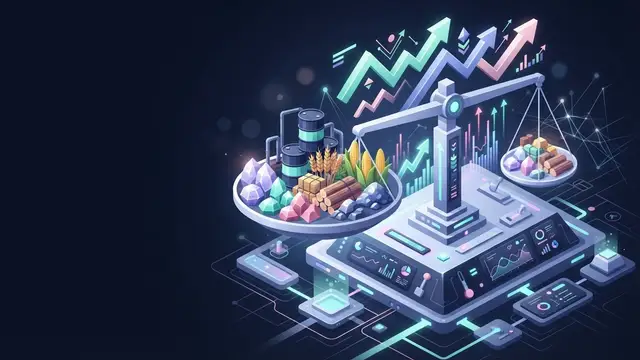
A commodity is a basic good that is interchangeable with other units of the same good, regardless of who produced it. A barrel of crude oil of a given grade, a bushel of wheat or a troy ounce of gold is equivalent to any other unit that meets the same specification. Commodities are raw materials and staples used to make other products. They trade in large volumes on specialized exchanges, serve as the underlying assets for futures and options, and are held by investors for diversification and as a possible hedge against inflation.
What makes something a commodity
The defining trait is that the product has very little differentiation. A consumer product such as a soft drink, a phone or a car carries a brand, and its quality and features vary with the maker. A ton of copper ore or a bushel of soybeans of the same grade does not. That sameness is what allows strangers to trade the good on an exchange without inspecting each shipment.
To make interchangeability work, exchanges set a minimum quality standard for each contract, known as the basis grade. A futures contract also fixes the quantity per contract, the acceptable grades (sometimes with price adjustments for grades above or below the standard), and the delivery locations and months. The Chicago Board of Trade (CBOT) wheat contract, for example, covers 5,000 bushels and lists which wheat grades qualify for delivery.
The idea extends beyond raw materials. Any product so standardized that competitors can only compete on price is called “commoditized,” and in trading the term also covers financial products such as foreign currencies and stock indexes that trade on futures exchanges alongside physical goods.
Types of commodities
The broad split is hard versus soft:
- Energy (hard): crude oil, natural gas, heating oil, gasoline.
- Metals (hard): precious metals such as gold, silver and platinum, and industrial metals such as copper and aluminum.
- Agriculture (soft): grains and oilseeds (wheat, corn, soybeans) and so-called softs (coffee, cocoa, sugar, cotton).
- Livestock and meat (soft): live cattle, lean hogs and other animal products.
Hard commodities come from finite deposits, so supply depends on mining and drilling capacity. Soft commodities follow growing seasons and weather, and many are perishable or costly to store, which shapes how their prices behave across delivery months.
How commodities are traded
There are two ways to transact. In the spot market, the buyer pays the current price and the good is delivered right away or within a short settlement period. In derivatives markets, traders agree today on a price for delivery later:
- Forwards are private, customized agreements between two parties.
- Futures are standardized forwards that trade on an exchange, with a clearinghouse standing between buyer and seller and daily settlement of gains and losses.
- Options on futures give the right, but not the obligation, to buy or sell a futures contract at a set price.
Derivatives let participants trade large volumes without moving physical goods each time. Most futures positions are closed or rolled before expiry rather than settled by delivery, and some contracts settle in cash.
The major U.S. venues are the CME Group, which operates the CBOT, the Chicago Mercantile Exchange (CME), the New York Mercantile Exchange (NYMEX) and the Commodity Exchange (COMEX), plus ICE Futures U.S. Large commodity exchanges also operate in London and Asia.
Hedgers and speculators
Hedgers are producers and users of the physical good: farmers, miners, refiners, airlines, food manufacturers. They trade futures to reduce price risk on business they already have, and some of them deliver or receive the commodity at contract expiry.
Speculators have no business need for the commodity. They take positions to profit from price changes and exit before delivery, supplying the other side of hedgers’ trades and bearing the price risk that hedgers want to shed.
Worked example: a wheat farmer’s hedge (hypothetical)
A farmer expects to harvest 10,000 bushels in several months. At planting, the farmer sells two wheat futures contracts (2 × 5,000 bushels) at a hypothetical $6.00 per bushel.
Assumptions: the local cash price at harvest equals the futures price (no basis difference), and commissions and margin financing are ignored.
| Harvest price | Crop sold in cash market | Futures result (sold at $6.00) | Combined |
|---|---|---|---|
| $5.00 | $50,000 | +$10,000 | $60,000 |
| $7.00 | $70,000 | −$10,000 | $60,000 |
Either way, the farmer ends with about $60,000, or $6.00 per bushel: the hedge removes the downside of a price drop and gives up the upside of a rise. In practice the local cash price and the futures price rarely move in perfect step, so the result is close to the locked-in price rather than exact.
A speculator who bought those contracts at $6.00 would gain or lose $10,000 on the same price moves. Because futures require only a margin deposit, that result can be large relative to the money put up.
What determines commodity prices
Commodity prices are set by supply and demand, and both sides respond to identifiable forces:
- Economic activity: a growing economy uses more energy and industrial metals; a slowdown reduces demand.
- Weather and natural disasters: droughts, floods and storms cut crop yields or disrupt production and shipping.
- Geopolitics and policy: conflicts, sanctions, export bans and production quotas can remove supply quickly.
- Currency moves: many major commodities are priced in U.S. dollars, so dollar strength or weakness changes what they cost for buyers using other currencies.
- Investor demand: money flowing into or out of commodity funds and futures adds to buying or selling pressure.
Inflation links several of these. Commodities are inputs to goods and services, so rising raw-material prices feed into consumer prices, and investors who expect inflation, especially unexpected inflation, may buy commodities to protect purchasing power. That added demand is the basis of the inflation-hedge argument.
How to invest in commodities
Individual investors have four main routes, each with a different link to the underlying price:
- Physical ownership. Practical mainly for precious metals such as gold coins or bars. You hold the actual good but pay dealer premiums and storage or insurance costs.
- Futures and options. Direct exposure to commodity prices with leverage. This requires a futures account, an understanding of margin calls and a plan for rolling contracts before expiry.
- Commodity ETFs and mutual funds. The most common route for ordinary investors. Some funds hold the physical metal; many others hold futures contracts and roll them. Compare a fund’s holdings and net asset value with its market price.
- Producer stocks. Shares of miners, oil companies or agribusinesses respond to commodity prices but also to company debt, costs, management and the broader stock market, so they are an indirect proxy.
Because commodity returns have not tended to move closely with stocks and bonds, many portfolio managers use them as a diversifier, judging the effect with risk-adjusted measures such as the Sharpe ratio.
Limitations and risks
- No cash flows. A commodity pays no dividends or interest. Its return comes only from price changes, plus or minus the cost of holding it.
- Volatility. Supply shocks can move prices sharply in either direction within days.
- Leverage. Small margin deposits on futures magnify losses as well as gains, and losses can exceed the initial deposit.
- Roll costs. Futures-based funds must replace expiring contracts. When later contracts cost more than nearer ones (contango), rolling can erode returns even if the spot price stays flat. The reverse condition (backwardation) can add to returns.
- Tracking gaps. A futures-based fund can perform quite differently from the spot price quoted in the news.
- Imperfect inflation hedge. The link between commodity prices and inflation varies by commodity and period and does not hold over every stretch of time.
Commodity vs. security vs. asset
- A commodity is a physical good consumed or used up in production, such as fuel that is burned or wheat that is milled.
- An asset, in this narrower sense, is not consumed by its use: machinery or money is used productively but persists.
- A security is a legal claim, such as a share or a bond, on cash flows from a business or borrower. A stock represents a share of a company’s future earnings; a bushel of corn represents only itself.
A commodity futures contract sits between these categories: it is a financial contract, but its value derives from a physical good, and it can end in delivery of that good. That difference also explains why commodities are valued on supply and demand rather than on discounted cash flows, the method used for stocks and bonds.
The Bottom Line
Commodities suit investors seeking diversification from stocks and bonds, but they pay no dividends or interest and can swing sharply on supply shocks. Most individuals reach them through ETFs, physical metals, futures or producer stocks, and each route tracks prices differently. Anyone buying a futures-based fund should check its holdings and roll costs, since its returns can diverge from the spot prices quoted in the news.