The 2008 Financial Crisis Explained
By Markets & Investing DeskUpdated Nov 10, 2026

Key takeaways
- The Fed cut the federal funds rate from 6.5% in May 2000 to 1% by June 2003, fueling cheap mortgage borrowing.
- After the SEC relaxed capital rules in 2004, five investment banks ran leverage of 30 or even 40 times their capital.
- At 30 to 1 leverage, a drop of about 3.3% in asset values can wipe out a firm's entire capital.
- TARP spent $440 billion and recovered $442.6 billion, and the bank investments were repaid with interest.
The 2008 financial crisis was the worst financial collapse since the Great Depression. Years of cheap credit and loose lending inflated a U.S. housing bubble, and Wall Street packaged risky mortgages into securities sold around the world. When home prices fell and borrowers defaulted, the banks and investors holding those securities took huge losses. Lending between banks froze, and the panic peaked with the bankruptcy of Lehman Brothers in September 2008. The result was a global recession, millions of foreclosures, government bailouts, and new financial regulation, most notably the Dodd-Frank Act.
The Roots of the Crisis: Cheap Money and a Housing Bubble
The crisis grew out of a period of very low interest rates. After the dot-com bubble burst, a wave of corporate accounting scandals hit (including the Enron scandal), and the September 11 attacks shook the economy. In response, the Federal Reserve cut the federal funds rate from 6.5% in May 2000 to 1% by June 2003. The goal was to support growth by making borrowing cheap for businesses and households.
Cheap borrowing flowed into housing. Low mortgage rates let more people buy homes and let existing owners borrow more, and home prices climbed steadily. Rising prices made lending look safer than it was: if a borrower ran into trouble, the house could usually be sold or refinanced at a higher value. That assumption held only as long as prices kept rising.
The Rise of Subprime Lending
Lenders increasingly approved subprime borrowers, people with weak or no credit histories, often for homes priced beyond what their incomes could support. Many of these loans were adjustable-rate mortgages (ARMs) with low introductory rates that reset higher after a few years. Some required little documentation of income.
Lenders were willing to make these loans because they did not plan to keep them. Even in normal times, banks often sell the mortgages they originate. During the bubble, a large secondary market developed: mortgage originators sold loans to big Wall Street banks, which bundled them and sold the bundles to investors. This “originate to distribute” model weakened the incentive to check whether a borrower could repay, because the lender collected its fees and passed the risk along.
Mortgage-Backed Securities and CDOs
A mortgage-backed security (MBS) works much like a bond. Thousands of home loans are pooled together, and investors buy claims on the interest and principal that homeowners pay each month. Banks also built collateralized debt obligations (CDOs), which repackaged pieces of MBS and other debt into new layers, or tranches, with different levels of risk. The senior tranches got paid first and were marketed as very safe.
Credit rating agencies gave many of these products top ratings, which let pension funds, insurers, and banks around the world buy them as if they were low risk. Investors were heavily exposed to mortgages before the crisis, often without a clear view of the loans underneath. When defaults rose, it became very hard to tell which securities would fail and who was holding them.
Leverage on Wall Street
In 2004, the Securities and Exchange Commission (SEC) relaxed net capital requirements for five large investment banks: Goldman Sachs, Merrill Lynch, Lehman Brothers, Bear Stearns, and Morgan Stanley. These firms then took on far more debt relative to their own capital, with leverage reaching 30 or even 40 times.
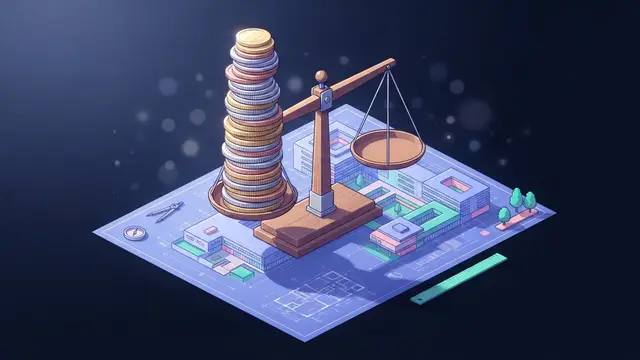
Leverage explains why falling mortgage values could sink a major bank. As a hypothetical example, consider a firm with $1 billion of its own capital that borrows enough to hold $30 billion in assets (30 to 1 leverage). A drop of about 3.3% in the value of those assets ($1 billion) erases all of its capital, even though 96.7% of the asset value remains. Lenders who see that risk stop rolling over the firm’s short-term loans, which forces it to sell assets into a falling market and deepens the losses.
Early Warnings: 2004 to 2007
The boom started to unwind as borrowing costs rose and the housing market became saturated. The Fed began raising rates in June 2004, and the federal funds rate reached 5.25% in 2006. It stayed there until August 2007. U.S. homeownership peaked at 69.2% in 2004, and home prices started to fall in early 2006.
Falling prices hit borrowers in several ways at once:
- Many homeowners owed more than their homes were worth, so selling meant paying the lender the difference.
- Borrowers with ARMs saw their payments rise as rates reset, just as their home values fell.
- Refinancing out of a bad loan became impossible once the home’s value no longer covered the mortgage.
- Subprime borrowers who could never really afford their loans began to default in large numbers.
Defaults moved quickly up the chain to lenders. As 2007 began, subprime lenders failed one after another, with more than 25 going under in February and March alone. New Century Financial, which made nearly $60 billion in loans in 2006, filed for bankruptcy in April 2007 and laid off about half its workforce. In June 2007, Bear Stearns stopped investors from withdrawing money from two of its hedge funds that had bet heavily on subprime mortgage securities.
August 2007: The Credit Freeze
By August 2007, it was clear the subprime problem could not be contained within the U.S. housing market. Banks around the world held mortgage securities, and none could be sure how much their trading partners stood to lose. The interbank lending market, where banks lend to each other overnight and for short periods to keep money moving, seized up. Banks hoarded cash rather than risk lending to an institution that might fail.
The freeze showed up first outside the United States. Northern Rock, a British mortgage lender that relied on short-term funding markets, had to ask the Bank of England for emergency support, and its customers lined up to withdraw deposits. In October 2007, Swiss bank UBS became the first major bank to announce losses from subprime-related investments, at $3.4 billion. Other large banks followed with write-downs of their own.
The Fed and other central banks coordinated to lend billions of dollars into credit markets over the following months. The core problem remained: institutions were holding trillions of dollars of mortgage securities that had become “toxic,” and there was no reliable way to value them because buyers had disappeared. The U.S. economy officially entered recession in December 2007.
March 2008: Bear Stearns Collapses
By early 2008, global stock markets were suffering their steepest declines since the September 2001 attacks. In January 2008, the Fed cut its benchmark rate by three-quarters of a percentage point, its largest single cut in about 25 years. In February, the British government nationalized Northern Rock.
In March 2008, Bear Stearns, a Wall Street firm founded in 1923, ran out of funding as lenders and clients pulled away. JPMorgan Chase acquired it for a fraction of its earlier market value, in a deal backed by the Federal Reserve. The rescue calmed markets for a few months, but it also showed that a major investment bank could fail almost overnight once confidence evaporated.
September 2008: Lehman Brothers and the Panic
The damage kept spreading through the summer of 2008. In July, IndyMac Bank failed, one of the largest bank failures in U.S. history at the time. In early September, the government placed Fannie Mae and Freddie Mac, the two giant mortgage companies that backed a large share of U.S. home loans, into conservatorship.
On September 15, 2008, Lehman Brothers filed for bankruptcy after efforts to find a buyer or a government rescue failed. It remains the largest bankruptcy in U.S. history and became the defining event of the crisis. The Lehman Brothers collapse mattered because Lehman was tied to thousands of counterparties around the world through loans, derivatives, and short-term funding. Its failure showed markets that the government would not save every large firm, and lenders pulled back from everyone.
The weeks that followed brought a rapid series of emergencies:
- Merrill Lynch agreed to be sold to Bank of America the same weekend Lehman failed.
- AIG, the insurance giant that had sold large amounts of credit default swaps (insurance-like contracts on mortgage securities), received an emergency government rescue.
- The Reserve Primary Fund, a money market fund holding Lehman debt, “broke the buck,” meaning its shares fell below $1. That triggered a wave of withdrawals from money market funds.
- Washington Mutual was seized by regulators in late September and sold to JPMorgan Chase, the largest bank failure in U.S. history.
U.S. stock indexes suffered some of their worst losses on record that autumn. The Fed, the Treasury Department, the White House, and Congress struggled to agree on a plan large enough to restore confidence.
The Government Response: Bailouts and TARP
Congress passed the Emergency Economic Stabilization Act in the first week of October 2008, after rejecting an earlier version of the bill. It created the Troubled Asset Relief Program (TARP), which was first designed to buy toxic assets and quickly shifted toward investing directly in bank shares to rebuild their capital. The broader rescue also included lifelines for Fannie Mae and Freddie Mac and support for the auto industry. The Federal Reserve cut interest rates to near zero by December 2008 and launched emergency lending programs and large-scale bond purchases.
Public anger was intense. To many people, bankers who had helped cause the crisis appeared to be rewarded with taxpayer money while ordinary borrowers lost their homes. The financial outcome of TARP was better than many expected, however. The government spent $440 billion through the program and recovered $442.6 billion as investments were repaid and assets were sold. The bank investments were repaid with interest.
Markets stabilized after the rescue. The stock market hit bottom in March 2009, with the S&P 500 down more than half from its October 2007 peak, and then began what became the longest bull market in its history. The recession officially ended in June 2009.
How the Crisis Affected People and Economies
- Jobs: U.S. unemployment reached 10%.
- Homes: About 3.8 million Americans lost their homes to foreclosure.
- Banks: More than 500 U.S. banks failed between 2008 and 2015, compared with 25 in the previous seven years, according to the Federal Reserve Bank of Cleveland. Most were small regional banks that other banks acquired along with their deposit accounts, and insured depositors were protected.
- Government debt: Bailouts, falling tax revenue, and stimulus spending, including the American Recovery and Reinvestment Act of 2009, pushed U.S. federal deficits sharply higher.
The 2008 financial crisis was a global event, not just an American one. Ireland’s fast-growing economy collapsed alongside its property market. Greece later defaulted on its international debts, and Portugal and Spain endured extremely high unemployment. These problems fed into the European debt crisis that followed.
Which Banks Failed?
The biggest failures were not ordinary Main Street banks but investment banks serving institutional clients, alongside the collapses of Washington Mutual and IndyMac.
Several large institutions, including JPMorgan Chase, Goldman Sachs, Bank of America, and Morgan Stanley, were considered “too big to fail.” They accepted bailout money, repaid it, and came out of the recession larger than before. Goldman Sachs and Morgan Stanley also converted to bank holding companies in September 2008, which gave them access to Fed support in exchange for tighter oversight.
Dodd-Frank: The Regulatory Response
The main legislative response was the Dodd-Frank Wall Street Reform and Consumer Protection Act, signed in 2010. It was the most ambitious overhaul of U.S. financial regulation since the 1930s, and among the most contested. Its main elements included:
- Higher capital and liquidity requirements for large banks, so they could absorb losses without a bailout
- Annual stress tests for the biggest banks to check whether they could survive a severe downturn
- Limits on risky trading by banks with insured deposits, through the Volcker Rule
- More oversight of derivatives such as credit default swaps
- Creation of the Consumer Financial Protection Bureau to address predatory lending and other consumer abuses
In 2018, Congress rolled back parts of the act, mainly by easing rules for smaller and midsize banks. A broader attempt to dismantle the regulations failed in the Senate.
Who Was to Blame?
No single party caused the crisis. Responsibility is usually spread across several groups:
- Mortgage lenders who marketed loans to people with no realistic way to repay them
- Investment banks that bought those loans, bundled them into securities, and sold them to investors while using heavy leverage themselves
- Credit rating agencies that gave top ratings to mortgage bundles, making them look safe
- Investors and traders who knowingly bought bad loans, expecting to sell them before they failed
- Regulators and policymakers who allowed higher leverage, kept rates low for a long period, and did not supervise the shadow banking system closely
Some borrowers also took on loans they could not afford, but many were steered into those loans by lenders paid to originate volume.
Who Made Money During the Crisis?
A few investors profited, either by betting against the housing market before it fell or by buying assets cheaply after the crash:
- John Paulson, a hedge fund manager, earned billions betting against subprime mortgages as the bubble formed and then profited again by betting on the recovery. Other short sellers of the housing market, including Michael Burry, became famous through the book and film The Big Short.
- Warren Buffett invested billions in companies including Goldman Sachs and General Electric on favorable terms, citing both patriotism and profit.
- Carl Icahn sold casino properties before the crash and bought them back at lower prices afterward.
Why the 2008 Crisis Still Matters
The crisis changed economic policy for more than a decade. Near-zero interest rates and large-scale bond buying by central banks became standard crisis tools. The debate over government stimulus revived interest in the ideas of John Maynard Keynes, and the scale of the response shaped later arguments about deficits and the limits of monetary policy.
The Bottom Line
The 2008 crisis matters to anyone trying to understand how loose lending, hidden mortgage risk, and heavy leverage can turn a housing slump into a global recession. Its legacy shapes banking and policy today, from Dodd-Frank capital rules and annual stress tests to near-zero interest rates and bond buying as standard crisis tools. No single party caused it, and the response left lasting debates over bailouts, deficits, and regulation.